Access free live classes and tests on the app
Download
+
Unacademy
  • Goals
    • AFCAT
    • AP EAMCET
    • Bank Exam
    • BPSC
    • CA Foundation
    • CAPF
    • CAT
    • CBSE Class 11
    • CBSE Class 12
    • CDS
    • CLAT
    • CSIR UGC
    • GATE
    • IIT JAM
    • JEE
    • Karnataka CET
    • Karnataka PSC
    • Kerala PSC
    • MHT CET
    • MPPSC
    • NDA
    • NEET PG
    • NEET UG
    • NTA UGC
    • Railway Exam
    • SSC
    • TS EAMCET
    • UPSC
    • WBPSC
    • CFA
Login Join for Free
avtar
  • ProfileProfile
  • Settings Settings
  • Refer your friendsRefer your friends
  • Sign outSign out
  • Terms & conditions
  • •
  • Privacy policy
  • About
  • •
  • Careers
  • •
  • Blog

© 2023 Sorting Hat Technologies Pvt Ltd

Watch Free Classes
JEE Main 2026 Preparation: Question Papers, Solutions, Mock Tests & Strategy Unacademy » JEE Study Material » Physics » Superposition Principle

Superposition Principle

In this article, we will discuss superposition principle, principle of superposition in electrostatics, continuous charge distribution and more. We determine the total force on a charge due to other charges by using the superposition principle.

Table of Content
  •  

The superposition principle allows us to determine the total force on a given charge due to any number of point charges acting on it. Each charged particle in the space around or surrounding it creates an electric field in the universe. The electric field produced by the charge is independent of the presence or absence of other charges. The generated electric field can be determined using Coulomb’s law. Two or more electric fields can be combined by using the superposition principle.

Electric Charges

Electric charge, also known as charge or electrostatic charge, is defined as the fundamental property of subatomic particles which causes them to experience a force when they are placed in an electromagnetic field. Generally, there are two types of electrical charges: positive charges, carried by protons and negative charges carried by electrons. If the net/total charge on an object is zero, that is neither positive nor negative, then it is said to be neutral. Electric charge is represented as Q and measured in coulombs. The unit of charge is the coulomb.

Superposition Principle

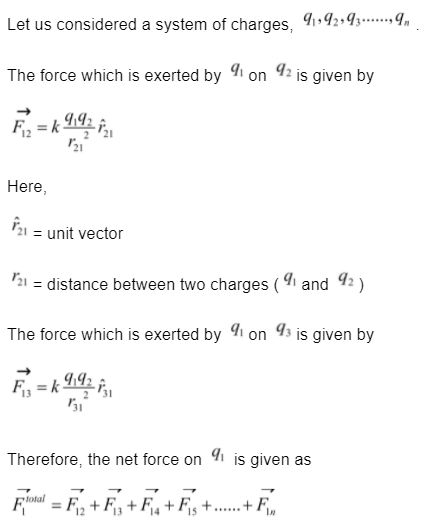
According to the principle of superposition, every charge in space produces an electric field at some point, which is independent from the presence of other charges in that medium. The resulting electric field is the vector sum of the electric field due to the individual charges.
Principle of Superposition in Electrostatics

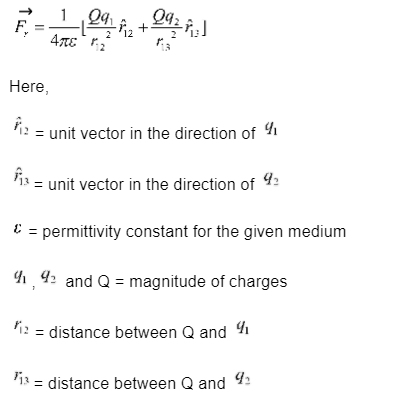
Let us consider, one positive charge and two negative charges which exert force on positive charge. Now, from the superposition theorem, the resulting force is the vector sum of all the remaining forces acting on the body.

Therefore,
Continuous Charge Distribution

In addition to the superposition principle in electrostatics, we have to get an idea of ​​the charge distribution. We know that we get either positive charge or negative charge. The charged element released is called a proton. When these protons are quantized, it is clear that the distance between them is much smaller and they are very tightly bound. So, the charge distribution on them can be given by the principle of superposition.

There are three types of continuous charge distribution which are as follows;

  1. Linear Charge Distribution
  2. Surface Charge Distribution
  3. Volume Charge Distribution

Linear Charge Distribution

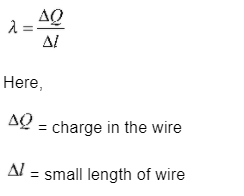
If the charges are equally dispersed along a length, for example about the circumference of a circle or along a straight cable or wire, then this is known as a linear charge distribution. it is represented as .

Linear charge density of a wire is determined as
Surface Charge Distribution

The surface charge density is little practical to characterize the charge distribution on the surface of a conductor which is charged with respect to the positions of the small charged elements.

The surface charge density is more practical for an area element S on the surface of conductor (small enough on a macroscopic scale but large enough to carry many electrons) and define the charge Q on that element.

Surface charge density is given as
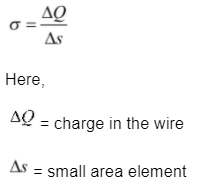
The surface charge density ignores charge quantization and charge distribution discontinuities at microscopic level, which is a smoothed average of the microscopic charge density over an element of area ∆S, which is very large in microscopic.

Volume Charge Distribution

When charge is distributed over the volume equally then it is known as volume charge density.

Volume charge density is given as
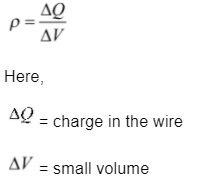
Coulomb’s Law of Electrostatics

Coulomb’s law of electrostatics provides an equation for the electric force between the electric charges. 

According to Coulomb’s law of electrostatics electrostatic force between two point charges separated by a distance is proportional to the product of the magnitude of charges and is inversely proportional to the square of the distance between these two charges.

The Coulomb’s law is given as
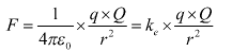
Here,

q = Test charge

Q = Source charge

F = force

r = distance between charges

Conclusion

The superposition principle allows us to determine the total force on a given charge due to any number of point charges acting on it.

According to superposition principle,

There are three types of continuous charge distribution which are as follows;

  1. Linear Charge Distribution
  2. Surface Charge Distribution
  3. Volume Charge Distribution

Linear charge density of a wire is determined as

faq

Frequently asked questions

Get answers to the most common queries related to the IIT JEE Examination Preparation.

Discuss principle of superposition in electrostatic.

Ans. Let us consider, one positive charge and two negative charges which exert force on positive charge. Now, from the superpositi...Read full

Define superposition principle.

Ans. According to the principle of superposition, every charge in space produces an electric field at some point, which is indepen...Read full

What are electrostatics?

Ans. Electrostatics is a branch of physics which is concerned with the study of electromagnetic phenomena in which electric charge...Read full

Ans. Let us consider, one positive charge and two negative charges which exert force on positive charge. Now, from the superposition theorem, the resulting force is the vector sum of all the remaining forces acting on the body.

Therefore,

Here,

= unit vector in the direction of

= unit vector in the direction of

= permittivity constant for the given medium

, and Q = magnitude of charges

= distance between Q and

= distance between Q and

Ans. According to the principle of superposition, every charge in space produces an electric field at some point, which is independent from the presence of other charges in that medium. The resulting electric field is the vector sum of the electric field due to the individual charges.

Ans. Electrostatics is a branch of physics which is concerned with the study of electromagnetic phenomena in which electric charges are at rest, that is when there are no moving charges after static equilibrium is established. In physics, the electrostatic phenomenon refers to the properties of slow-moving or static electrical charges.

Challenge Yourself Everyday
Attempt 2023’s and previous year’s JEE Main
Download Important Formulas pdf
Attempt Free Test Series for JEE Main 2023

Trending Topics

  • JEE Main 2024
  • JEE Main Rank Predictor 2024
  • JEE Main Mock Test 2024
  • JEE Main 2024 Admit Card
  • JEE Advanced Syllabus
  • JEE Preparation Books
  • JEE Notes
  • JEE Advanced Toppers
  • JEE Advanced 2022 Question Paper
  • JEE Advanced 2022 Answer Key
  • JEE Main Question Paper
  • JEE Main Answer key 2022
  • JEE Main Paper Analysis 2022
  • JEE Main Result
  • JEE Exam Pattern
  • JEE Main Eligibility
  • JEE College predictor

JEE Coaching Centres

  • JEE Coaching in Nagpur
  • JEE Coaching in Ranchi
  • JEE Coaching in Gorakhpur
  • JEE Coaching in Bhubaneswar
  • JEE Coaching in Vijayawada
  • JEE Coaching in Dehradun
  • JEE Coaching in Indore
  • JEE Coaching in Gurugram
  • JEE Coaching in Muzaffarpur
  • JEE Coaching in Varanasi
  • JEE Coaching in Jammu
  • JEE Coaching in Kolhapur
  • JEE Coaching in Bikaner
  • JEE Coaching in Delhi Lajpat Nagar
Predict your JEE Rank
.
Company Logo

Unacademy is India’s largest online learning platform. Download our apps to start learning


Starting your preparation?

Call us and we will answer all your questions about learning on Unacademy

Call +91 8585858585

Company
About usShikshodayaCareers
we're hiring
BlogsPrivacy PolicyTerms and Conditions
Help & support
User GuidelinesSite MapRefund PolicyTakedown PolicyGrievance Redressal
Products
Learner appLearner appEducator appEducator appParent appParent app
Popular goals
IIT JEEUPSCSSCCSIR UGC NETNEET UG
Trending exams
GATECATCANTA UGC NETBank Exams
Study material
UPSC Study MaterialNEET UG Study MaterialCA Foundation Study MaterialJEE Study MaterialSSC Study Material

© 2026 Sorting Hat Technologies Pvt Ltd

Unacademy
  • Goals
    • AFCAT
    • AP EAMCET
    • Bank Exam
    • BPSC
    • CA Foundation
    • CAPF
    • CAT
    • CBSE Class 11
    • CBSE Class 12
    • CDS
    • CLAT
    • CSIR UGC
    • GATE
    • IIT JAM
    • JEE
    • Karnataka CET
    • Karnataka PSC
    • Kerala PSC
    • MHT CET
    • MPPSC
    • NDA
    • NEET PG
    • NEET UG
    • NTA UGC
    • Railway Exam
    • SSC
    • TS EAMCET
    • UPSC
    • WBPSC
    • CFA

Share via

COPY