Access free live classes and tests on the app
Download
+
Unacademy's Blog!
Login Join for Free
avtar
  • ProfileProfile
  • Settings Settings
  • Refer your friendsRefer your friends
  • Sign outSign out
  • Terms & conditions
  • •
  • Privacy policy
  • About
  • •
  • Careers
  • •
  • Blog

© 2023 Sorting Hat Technologies Pvt Ltd

[wp_login_wall media_id="448945" text_before_login="Download JEE Maths Formulas" text_after_login="Download JEE Maths Formulas"]

Trending Topics

  • JEE Main 2024
  • JEE Main Rank Predictor 2024
  • JEE Main Mock Test 2024
  • JEE Main 2024 Admit Card
  • JEE Advanced Syllabus
  • JEE Preparation Books
  • JEE Notes
  • JEE Advanced Toppers
  • JEE Advanced 2022 Question Paper
  • JEE Advanced 2022 Answer Key
  • JEE Main Question Paper
  • JEE Main Answer key 2022
  • JEE Main Paper Analysis 2022
  • JEE Main Result
  • JEE Exam Pattern
  • JEE Main Eligibility
  • JEE College predictor
[wp_login_wall media_id="424566" text_before_login=" Download Previous Year Papers" text_after_login="Download Previous Year Papers"] combat_iitjee

Related links

  • JEE Study Materials
  • CNG Full Form
  • Dimensional Formula of Pressure
  • Reimer Tiemann Reaction
  • Vector Triple Product
  • Swarts Reaction
  • Focal length of Convex Lens
  • Root mean square velocities
  • Fehling’s solution
testseries_iitjee Predict your JEE Rank .
[wp_login_wall media_id="448945" text_before_login="Download JEE Maths Formulas" text_after_login="Download JEE Maths Formulas"]

Trending Topics

  • JEE Main 2024
  • JEE Main Rank Predictor 2024
  • JEE Main Mock Test 2024
  • JEE Main 2024 Admit Card
  • JEE Advanced Syllabus
  • JEE Preparation Books
  • JEE Notes
  • JEE Advanced Toppers
  • JEE Advanced 2022 Question Paper
  • JEE Advanced 2022 Answer Key
  • JEE Main Question Paper
  • JEE Main Answer key 2022
  • JEE Main Paper Analysis 2022
  • JEE Main Result
  • JEE Exam Pattern
  • JEE Main Eligibility
  • JEE College predictor
[wp_login_wall media_id="424566" text_before_login=" Download Previous Year Papers" text_after_login="Download Previous Year Papers"] combat_iitjee

Related links

  • JEE Study Materials
  • CNG Full Form
  • Dimensional Formula of Pressure
  • Reimer Tiemann Reaction
  • Vector Triple Product
  • Swarts Reaction
  • Focal length of Convex Lens
  • Root mean square velocities
  • Fehling’s solution
testseries_iitjee Predict your JEE Rank .
JEE Main 2026 Preparation: Question Papers, Solutions, Mock Tests & Strategy Unacademy » JEE Study Material » Mathematics » Leibnitz Theorem
[wp_login_wall media_id="448945" text_before_login="Download JEE Maths Formulas" text_after_login="Download JEE Maths Formulas"]

Trending Topics

  • JEE Main 2024
  • JEE Main Rank Predictor 2024
  • JEE Main Mock Test 2024
  • JEE Main 2024 Admit Card
  • JEE Advanced Syllabus
  • JEE Preparation Books
  • JEE Notes
  • JEE Advanced Toppers
  • JEE Advanced 2022 Question Paper
  • JEE Advanced 2022 Answer Key
  • JEE Main Question Paper
  • JEE Main Answer key 2022
  • JEE Main Paper Analysis 2022
  • JEE Main Result
  • JEE Exam Pattern
  • JEE Main Eligibility
  • JEE College predictor
[wp_login_wall media_id="424566" text_before_login=" Download Previous Year Papers" text_after_login="Download Previous Year Papers"] combat_iitjee

Related links

  • JEE Study Materials
  • CNG Full Form
  • Dimensional Formula of Pressure
  • Reimer Tiemann Reaction
  • Vector Triple Product
  • Swarts Reaction
  • Focal length of Convex Lens
  • Root mean square velocities
  • Fehling’s solution
testseries_iitjee Predict your JEE Rank .

Leibnitz Theorem

The Leibniz Rule is a mathematical formula that is defined for the derivative of the antiderivative. According to the Leibniz rule, the derivative on the nth order of the product of two functions may be stated mathematically with the use of a simple formula.

Table of Content
  •  

The Leibnitz rule for derivative of the antiderivative is essentially what this theorem is about. In accordance with the rule, the derivative in nth order of the product of two functions may be stated mathematically with the assistance of an equation. Antiderivatives (also known as primitives) of a function are functions that might have been used to calculate the derivative of a function if the function had been supplied. All of these antiderivatives may be found using a formula known as the indefinite integral of the function, and the process of discovering antiderivatives is referred to as an integration of the function.

Leibniz Rule

The Leibniz rule of differentiation is a generalisation of the product rule of differentiation. According to the Leibniz rule, if two functions f(x) and g(x) are differentiable n times separately, then their product f(x) is also differentiable n times (x). g(x) is likewise differentiable n times in the same way. Polynomial functions, trigonometric functions, exponential functions, and logarithmic functions are examples of functions that can be used. Let us generalise the Leibniz rule using the formula shown below.

Here nCr = n!(r!.(n−r)! and n! = 1 × 2 v 3 × 4 × ….(n – 1) × n.

For the most part, the Leibniz rule is used to calculate the derivative of the product of two functions. If f(x) and g(x) are functions, then the first derivative of the product of these functions is equal to the sum of their first derivatives. If f(x) is an integer, then the first derivative is equal to the product of their first derivatives. If g(x) is an integer, then the first derivative is equal to the product of their first derivatives.

(f(x).g(x))’ = f'(x).g(x) + f(x).g'(x)

To further our investigation, we may employ the Leibniz rule to get the second derivative resulting from the product of two functions. For the second derivative of the product of two functions, f(x) and g(x), the Leibniz rule for the second derivative may be thought of as being analogous to the binomial expansion of a pair of terms of the second degree. Let’s also look at the second derivative of the product of the functions as a reference point.

(f(x).g(x))” = f”(x).g(x) + 2f'(x).g'(x) + f(x).g'(x)

The leibniz rule may be used to compute the product of several functions as well as the derivatives of a large number of functions. The mathematical induction method can be used to show the Leibniz rule.

Leibnitz Theorem Formula

Imagine there exist two functions, u(t) and v(t), which have derivatives up to the nth order, and the derivatives of these two functions are equal. Consider the derivative of the product of these two functions, which is the derivative of the product of these two functions.

The first derivative might be expressed as follows:

(uv)’ = u’v+uv’

We may now take the second derivative of the preceding statement by differentiating it once again.

(uv)’’

= [(uv)’]’

= (u’v+uv’)’

= (u’v)’+(uv’)’

= u′′v + u′v′ + u′ v′ + uv′′

= u′′v + 2u′v′ + uv′′

We can do the same thing with the third derivative.

(uv)′′′

= [(uv)′′]′

= (u′′v + 2u′v′ + uv′′)′

= (u′′v)′ + (2u′v′)′ + (uv′′)′

= u′′′v + u′′v′ + 2u′′v′ + 2u′v′′ + u′v′′ + uv′′′

= u′′′v + 3u′′v′ + 3u′v′′ + uv′′′

When we compare these two formulations, we see that they are quite close to the binomial expansion increased to the exponentiation level. By taking into consideration the components with zero exponents, u0 and v0, which correspond to the functions u and v themselves, we can obtain the formula for the nth order of the derivative product of two functions, which is written as
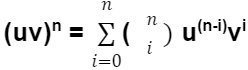
Where ( in ) represents the number of i-combinations on n elements.

This formula is referred to as the Leibniz Rule formula, and it may be demonstrated by induction.

Conclusion

The Leibnitz theorem, often known as the Leibniz integral rule for derivation, is a mathematical concept that is represented by the integral sign. It was given its name in honour of the well-known scientist Gottfried Leibniz. As a result, the theorem is primarily intended for use with the derivative of the antiderivative. Essentially, the Leibnitz theorem is used to generalise the product rule of differentiation, which is a mathematical concept. If there are two functions, let them be a(x) and b(x), and if they are both differentiable independently, then their product a(x) is a function of the x variable (x). b(x) is also differentiable up to n times.

faq

Frequently asked questions

Get answers to the most common queries related to the JEE Examination Preparation.

What is the purpose of using the Leibnitz Theorem?

Ans. The Leibnitz theorem is used to generalise the product rule of differentiation, which is a mathematical formula. If there are two functions, ...Read full

Who was the inventor of the Leibniz Theorem?

Ans. With the invention of the computing machine in 1671, Gottfried Wilhelm von Leibniz made substantial advances in the field of mechanical calcu...Read full

What is the notation used by Leibniz?

Ans. According to Leibniz, the symbols dx and dy are used to represent infinitesimal increments of x and y respectiv...Read full

What exactly is the Leibniz Theorem?

Ans. The Leibniz formula expresses the nth order of derivative of a product of two functions in terms of the nth ord...Read full

How does one go about proving the Leibniz Theorem?

Ans. Imagine there exist two functions, u(t) and v(t), which have derivatives up to the nth order, and the derivativ...Read full

Ans. The Leibnitz theorem is used to generalise the product rule of differentiation, which is a mathematical formula. If there are two functions, let them be a(x) and b(x), and if they are both differentiable independently, then their product a(x) is a function of the x variable (x). b(x) is also differentiable up to n times.

Ans. With the invention of the computing machine in 1671, Gottfried Wilhelm von Leibniz made substantial advances in the field of mechanical calculating and mathematics. The rules of calculus were initially given down in a paper written by Gottfried Wilhelm Leibniz in 1684.

Ans. According to Leibniz, the symbols dx and dy are used to represent infinitesimal increments of x and y respectively, whereas the symbols  Δx and  Δy are used to represent finite increments of x and y, respectively, in the coordinate system.

Ans. The Leibniz formula expresses the nth order of derivative of a product of two functions in terms of the nth order of derivative.

Ans. Imagine there exist two functions, u(t) and v(t), which have derivatives up to the nth order, and the derivatives of these two functions are equal. Consider the derivative of the product of these two functions, which is the derivative of the product of these two functions. This formula is referred to as the Leibniz Rule formula, and it may be demonstrated by induction.

Trending Topics

  • JEE Main 2024
  • JEE Main Rank Predictor 2024
  • JEE Main Mock Test 2024
  • JEE Main 2024 Admit Card
  • JEE Advanced Syllabus
  • JEE Preparation Books
  • JEE Notes
  • JEE Advanced Toppers
  • JEE Advanced 2022 Question Paper
  • JEE Advanced 2022 Answer Key
  • JEE Main Question Paper
  • JEE Main Answer key 2022
  • JEE Main Paper Analysis 2022
  • JEE Main Result
  • JEE Exam Pattern
  • JEE Main Eligibility
  • JEE College predictor
combat_iitjee

Related links

  • JEE Study Materials
  • CNG Full Form
  • Dimensional Formula of Pressure
  • Reimer Tiemann Reaction
  • Vector Triple Product
  • Swarts Reaction
  • Focal length of Convex Lens
  • Root mean square velocities
  • Fehling’s solution
testseries_iitjee
Predict your JEE Rank
.

Trending Topics

  • JEE Main 2024
  • JEE Main Rank Predictor 2024
  • JEE Main Mock Test 2024
  • JEE Main 2024 Admit Card
  • JEE Advanced Syllabus
  • JEE Preparation Books
  • JEE Notes
  • JEE Advanced Toppers
  • JEE Advanced 2022 Question Paper
  • JEE Advanced 2022 Answer Key
  • JEE Main Question Paper
  • JEE Main Answer key 2022
  • JEE Main Paper Analysis 2022
  • JEE Main Result
  • JEE Exam Pattern
  • JEE Main Eligibility
  • JEE College predictor
combat_iitjee

Related links

  • JEE Study Materials
  • CNG Full Form
  • Dimensional Formula of Pressure
  • Reimer Tiemann Reaction
  • Vector Triple Product
  • Swarts Reaction
  • Focal length of Convex Lens
  • Root mean square velocities
  • Fehling’s solution
testseries_iitjee
Predict your JEE Rank
.
Company Logo

Unacademy is India’s largest online learning platform. Download our apps to start learning


Starting your preparation?

Call us and we will answer all your questions about learning on Unacademy

Call +91 8585858585

Company
About usShikshodayaCareers
we're hiring
BlogsPrivacy PolicyTerms and Conditions
Help & support
User GuidelinesSite MapRefund PolicyTakedown PolicyGrievance Redressal
Products
Learner appLearner appEducator appEducator appParent appParent app
Popular goals
IIT JEEUPSCSSCCSIR UGC NETNEET UG
Trending exams
GATECATCANTA UGC NETBank Exams
Study material
UPSC Study MaterialNEET UG Study MaterialCA Foundation Study MaterialJEE Study MaterialSSC Study Material

© 2026 Sorting Hat Technologies Pvt Ltd

Unacademy's Blog!

Share via

COPY