


 Profile
 Settings
 Refer your friends
 Sign out


Why in News:
- The focus on Waste-to-Energy technology has intensified under the new Solid Waste Management Rules 2026 to reduce landfill dependency and manage non-recyclable waste effectively.
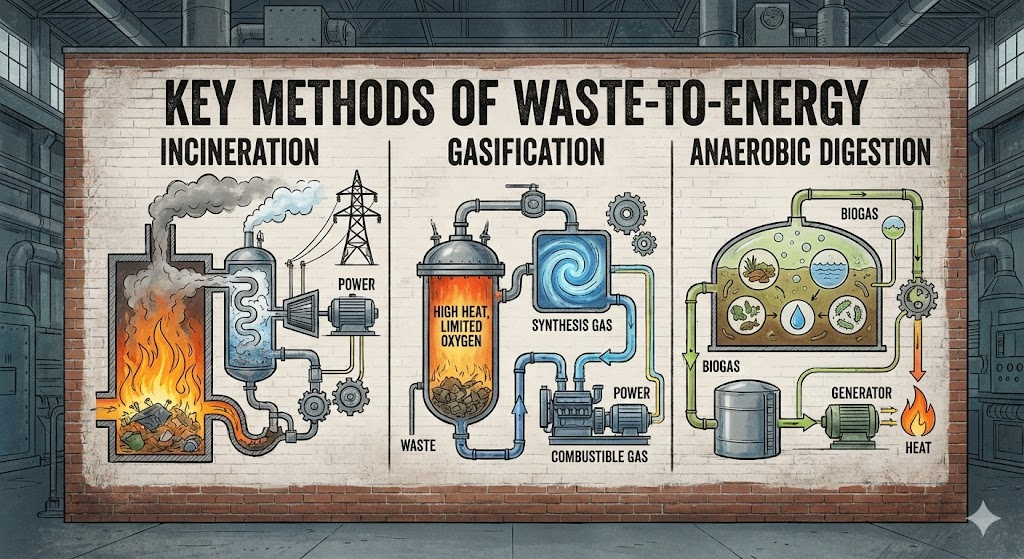
- Definition: WtE is a technology that converts non-recyclable waste materials into usable forms of energy, primarily heat or electricity.
- Key Methods:
- Incineration: The most common method where trash is burned at high temperatures to boil water; the resulting steam turns turbines to generate power.
- Gasification: Uses high heat with little oxygen to convert waste into combustible gas.
- Anaerobic Digestion: Uses bacteria to break down organic waste in the absence of oxygen to produce biogas.
- Benefits:
- Volume Reduction: Can reduce waste volume by nearly 90%, significantly extending the lifespan of landfills.
- Emission Control: Prevents the release of Methane (a potent greenhouse gas) that otherwise generates from decomposing organic waste in landfills.
- Drawbacks & Concerns:
- Pollution: Burning waste releases Carbon Dioxide. Poorly controlled plants can emit toxins like dioxins, furans, and heavy metals (though modern scrubbers mitigate this).
- Recycling Conflict: Critics argue it may discourage sustainable habits like recycling and composting by creating a constant demand for waste fuel.
- Status in India:
- Currently, there are 21 WtE plants and 133 biogas facilities operational.
- Solid Waste Management Rules 2026: These rules mandate strict waste segregation and encourage the use of Refuse-Derived Fuel (RDF) to minimize the burden on landfills.
