


 Profile
 Settings
 Refer your friends
 Sign out




Overview:
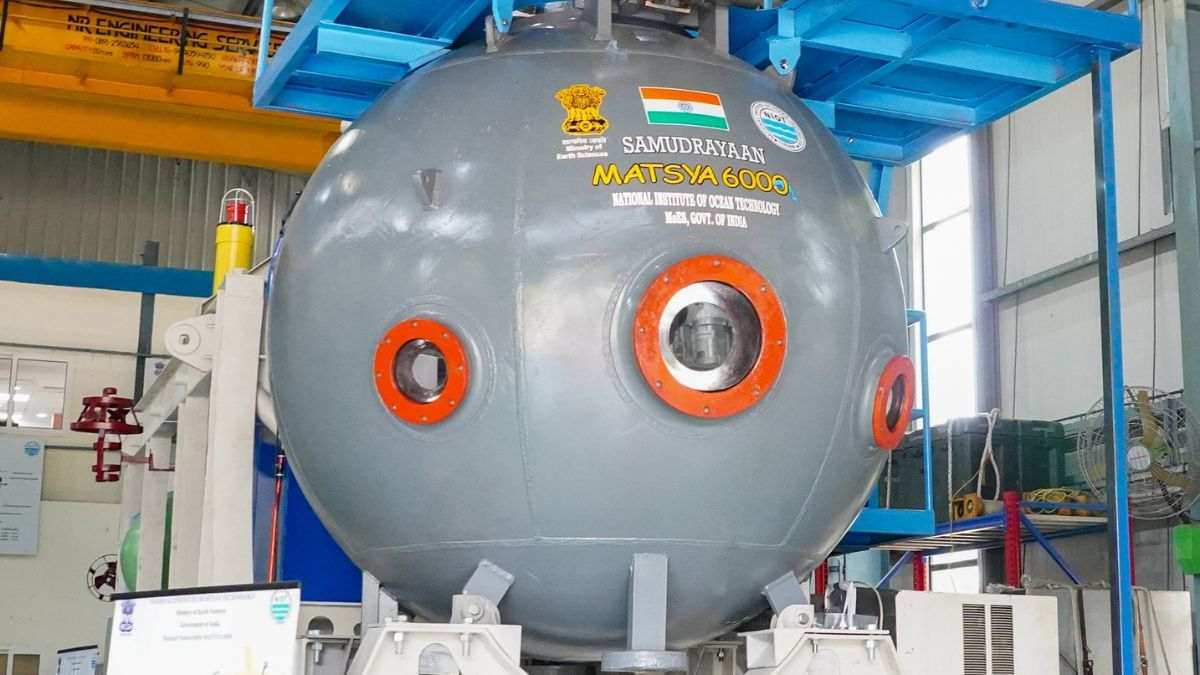
- India’s first human deep-sea mission, part of the Deep Ocean Mission (2021).
- Aim: Send 3 humans (aquanauts) to 6,000 metres depth by 2027.
- Recent milestone: Two Indian aquanauts dived 5,002 m and 4,025 m in the Atlantic Ocean aboard French vessel Nautile (training exercise).
- Coordinating Agency: National Institute of Ocean Technology (NIOT).
Objectives of Samudrayaan:
- Develop technologies for deep-sea mining, underwater robotics, and submersibles.
- Explore polymetallic nodules on ocean floor (rich in nickel, cobalt, rare earths).
- Create ocean climate change advisory services (future climate projections).
- Develop technologies for ocean energy and freshwater extraction.
- Conduct biodiversity conservation and deep-ocean surveys.
- Establish advanced marine station for ocean biology and engineering.
Matsya-6000 Submersible
- Crewed vehicle designed like a big fish.
- Personnel Sphere: 2.1 m diameter, houses 3 aquanauts.
- Mission endurance: 12 hours (normal), 96 hours (emergency).
- Test dives: Initial 500 m depth in steel sphere; final version in titanium alloy sphere (80 mm thick) to withstand 600 times surface pressure.
- Fabrication → Electron beam welding by ISRO.
Why in News?
- Two Indian aquanauts recently completed deep dives in the Atlantic Ocean, marking training progress for the Samudrayaan Project, which aims to send Indians 6,000 metres under the sea by 2027 using the Matsya-6000 submersible.
