


 Profile
 Settings
 Refer your friends
 Sign out




What is a Pay Commission?
- A Pay Commission is a body set up by the Union government through an executive order.
Role of a Pay Commission
- Reviews salary structures of Central government employees
- Examines pensions and retirement benefits
- Looks into service conditions for civilian and defence staff
- Suggests updates and reforms based on economic and administrative needs
First Central Pay Commission : 1946
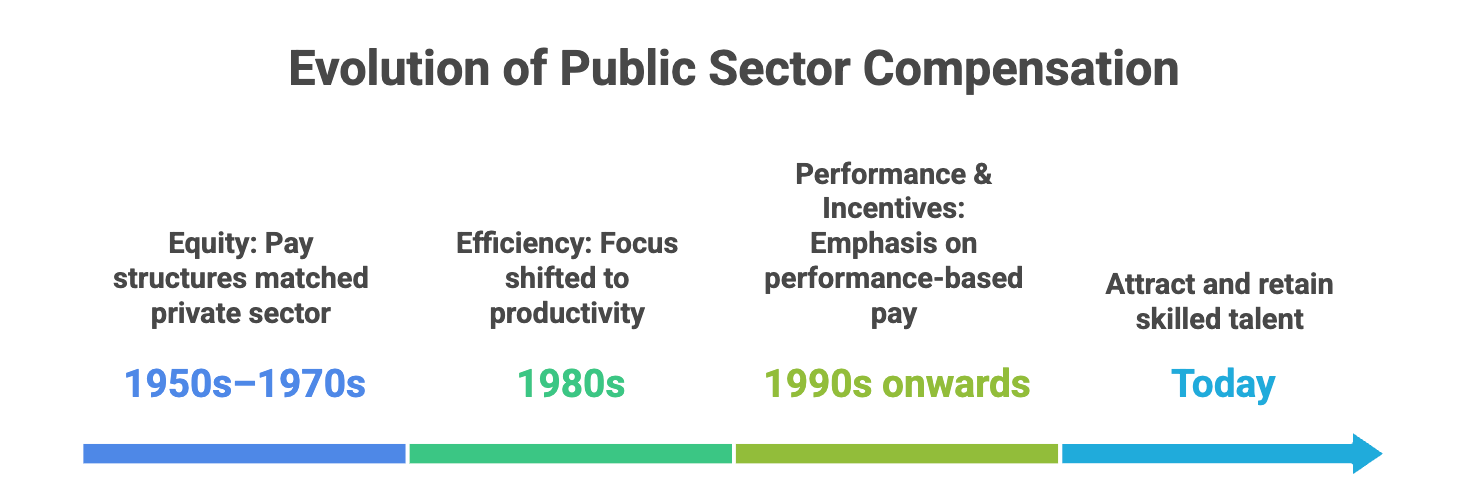
Terms of Reference (TOR) of the 8th CPC
- The Union Cabinet decides the TOR. The 8th CPC must consider:
- Economic conditions and fiscal prudence
- Need to protect funds for development and welfare
- Rising cost of non-contributory pensions
- Impact on State finances
- Current pay structures in government, PSUs, and private sector
Issues Highlighted in Earlier CPCs
- Entry-level government salaries are often higher than private sector
- Senior-level salaries are lower than private sector
- Compression ratio (lowest vs. highest pay) in 7th CPC: 1:12.5
- Job security and perks partly compensate for lower high-level pay
What Is Missing in the TOR?
- Focus on learning & development
- Training and skill building
- Work environment improvements
- Flexible work arrangements
- Health and wellness programmes
Way Forward
- Broaden the commission to include finance and HR professionals
- Ensure recommendations consider future workforce needs
- Improve competitiveness for specialised posts
- Address training, work culture, and employee well-being
Why in News?
- The Central government has set up the 8th Central Pay Commission (CPC), chaired by Justice (Retd.) Ranjana Prakash Desai with members Prof. Pulak Ghosh (part-time) and Pankaj Jain (Member-Secretary), and it will submit its report in 18 months.
