Profile
 Settings
 Refer your friends
 Sign out




Why in News?
- Scientists in Italy are developing 3D-printed nutritious snacks under the Nutri3D project using lab-grown plant cells and fruit residues.
What is the Nutri3D Project?
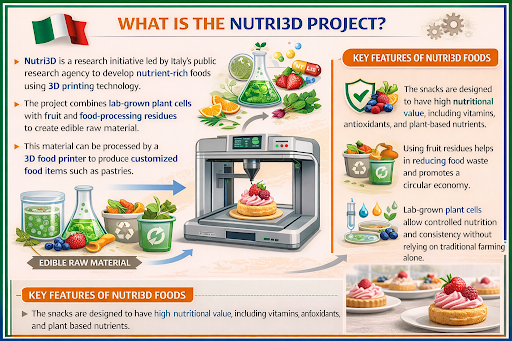
- Nutri3D is a research initiative led by Italy’s public research agency to develop nutrient-rich foods using 3D printing technology.
- The project combines lab-grown plant cells with fruit and food-processing residues to create edible raw material.
- This material can be processed by a 3D food printer to produce customised food items such as pastries.
Key Features of Nutri3D Foods
- The snacks are designed to have high nutritional value, including vitamins, antioxidants, and plant-based nutrients.
- Using fruit residues helps in reducing food waste and promotes a circular economy.
- Lab-grown plant cells allow controlled nutrition and consistency without relying on traditional farming alone.
Technology Used
- 3D food printing enables precise shaping, portion control, and nutrient customization.
- The printable material is engineered to have the right texture and stability for food printing.
- This approach integrates biotechnology, food science, and additive manufacturing.
Significance and Potential Impact
- Nutri3D supports sustainable food systems by reusing food waste and lowering resource use.
- It offers scope for personalized nutrition, especially for children, elderly people, and patients with special dietary needs.
- The project highlights the future role of advanced technologies in food security and nutrition.