


 Profile
 Settings
 Refer your friends
 Sign out




- The solar wind is a continuous flow of charged particles released from the Sun.
- This flow creates the heliosphere, which shields Earth and other planets from harmful cosmic rays and interstellar particles.
- Despite its importance, scientists still do not fully understand the boundary, dynamics, and particle behaviour of the heliosphere.
- Changes in the solar wind also cause space weather, which can damage satellites, harm astronauts, disrupt power grids, and block communication systems on Earth.
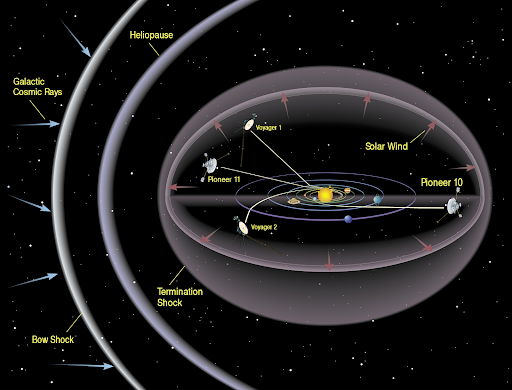
- The heliosphere is a vast, bubble-like region of space surrounding our solar system that is created by the solar wind (a continuous stream of charged particles released by the Sun).
- It extends far beyond the orbit of Pluto and acts as a protective shield, blocking or deflecting harmful cosmic rays and interstellar particles from entering the inner solar system.
- The outer boundary of the heliosphere, where the solar wind slows down and collides with the interstellar medium, is called the heliopause.
- IMAP carries 10 scientific instruments, including:
- Energetic Neutral Atom Detectors (IMAP-Lo, IMAP-Hi, IMAP-Ultra) that track atoms formed when charged particles gain electrons.
- Instruments to study charged particles, magnetic fields, interstellar dust, and solar-wind structures.
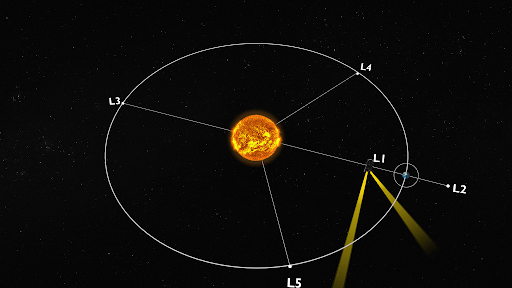
- The spacecraft will travel to the Sun–Earth Lagrange Point 1 (L1), approximately 1.6 million kilometres from Earth, where gravity allows it to remain in a stable orbit with minimal fuel consumption.
- Main Goals:
- Create the most detailed map of the heliosphere’s boundary.
- Understand how particles from the Sun accelerate and move through space.
- Provide near real-time data to improve space weather forecasting
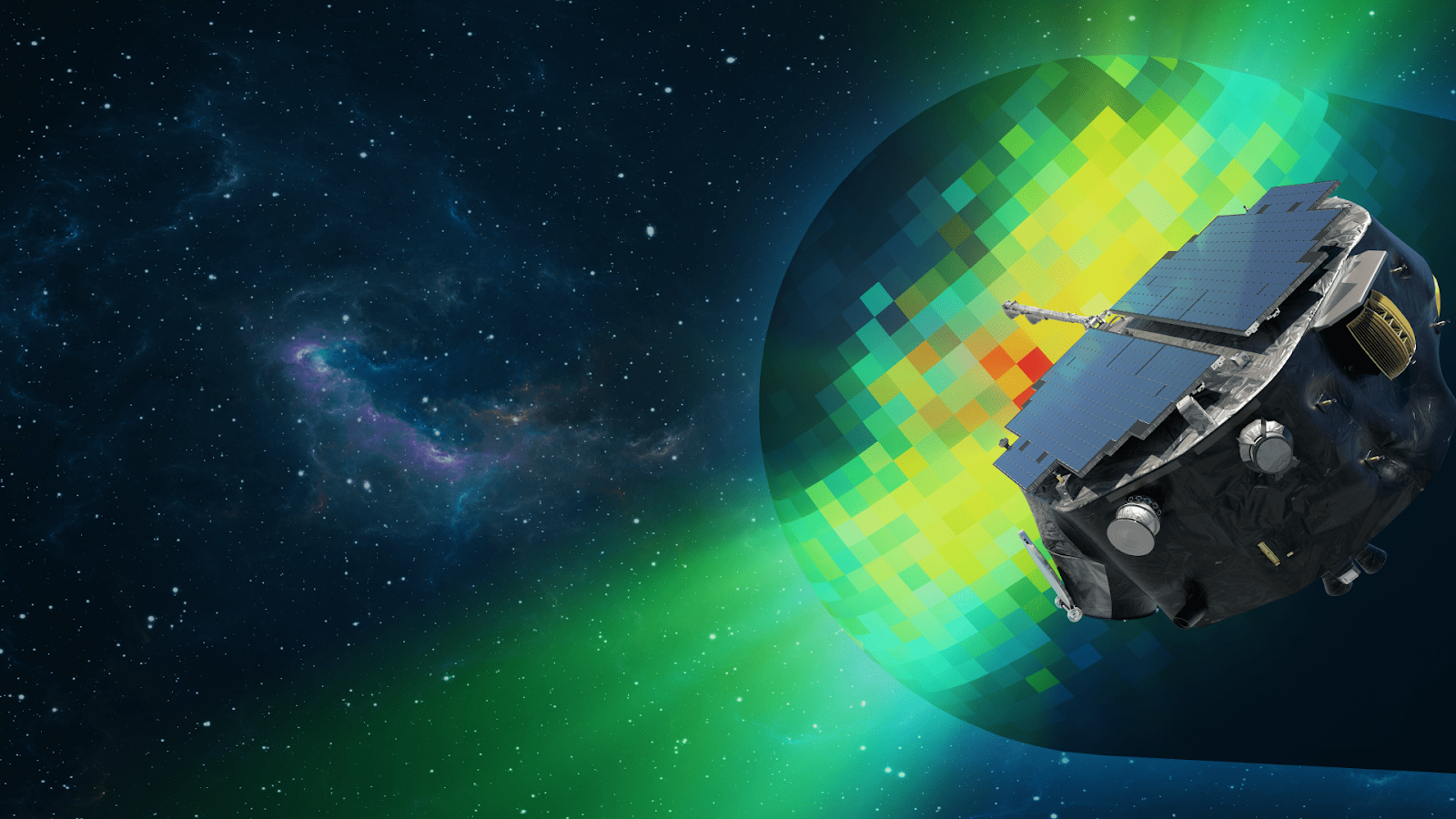
- On September 24, 2025, the National Aeronautics and Space Administration (NASA) launched the Interstellar Mapping and Acceleration Probe (IMAP) to study the heliosphere.
