


 Profile
 Settings
 Refer your friends
 Sign out




Why in News?
- In March 2024, the Narsapur Crochet Lace craft was officially granted the Geographical Indication (GI) tag by the DPIIT. In November 2024, the Union Minister of Textiles formally presented the GI certificate to the local authorities at the ‘GI & Beyond 2024’ Summit in New Delhi.
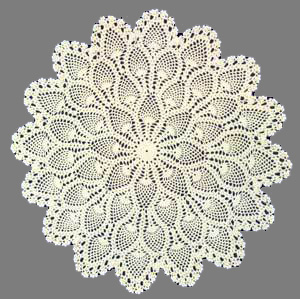
- Geographical Location: The craft is centered in the towns of Narsapur and Palacole on the banks of the Godavari River in the West Godavari district of Andhra Pradesh.
- Historical Origin: Introduced in 1844 by Scottish missionaries (Mr. and Mrs. Macrae), the craft began as a livelihood initiative for local women.
- Resilience: The industry successfully survived major historical shocks, including the Indian Famine of 1899 and the Great Depression of 1929.
- Artisan Community: It is primarily a women-led cottage industry, involving nearly 15,000 artisans, mainly from the Kapu and fishing communities.
- Unique Technique: Artisans use a single crochet hook (needle) to transform thin cotton threads into intricate interlocking loops and stitches.
- Design Motifs: Features over 400 unique patterns, including floral, paisley, and geometric motifs inspired by nature and local mythology.
- Global Export: The lace is highly valued internationally, with significant exports reaching the USA, UK, France, and Japan.
