


 Profile
 Settings
 Refer your friends
 Sign out




Why in News?
-
In December 2025, researchers at the University of Technology Sydney developed safer “mild” mitochondrial uncouplers. These experimental compounds allow cells to burn fat as heat rather than storing it as energy, offering a potential breakthrough for treating obesity and metabolic disorders.
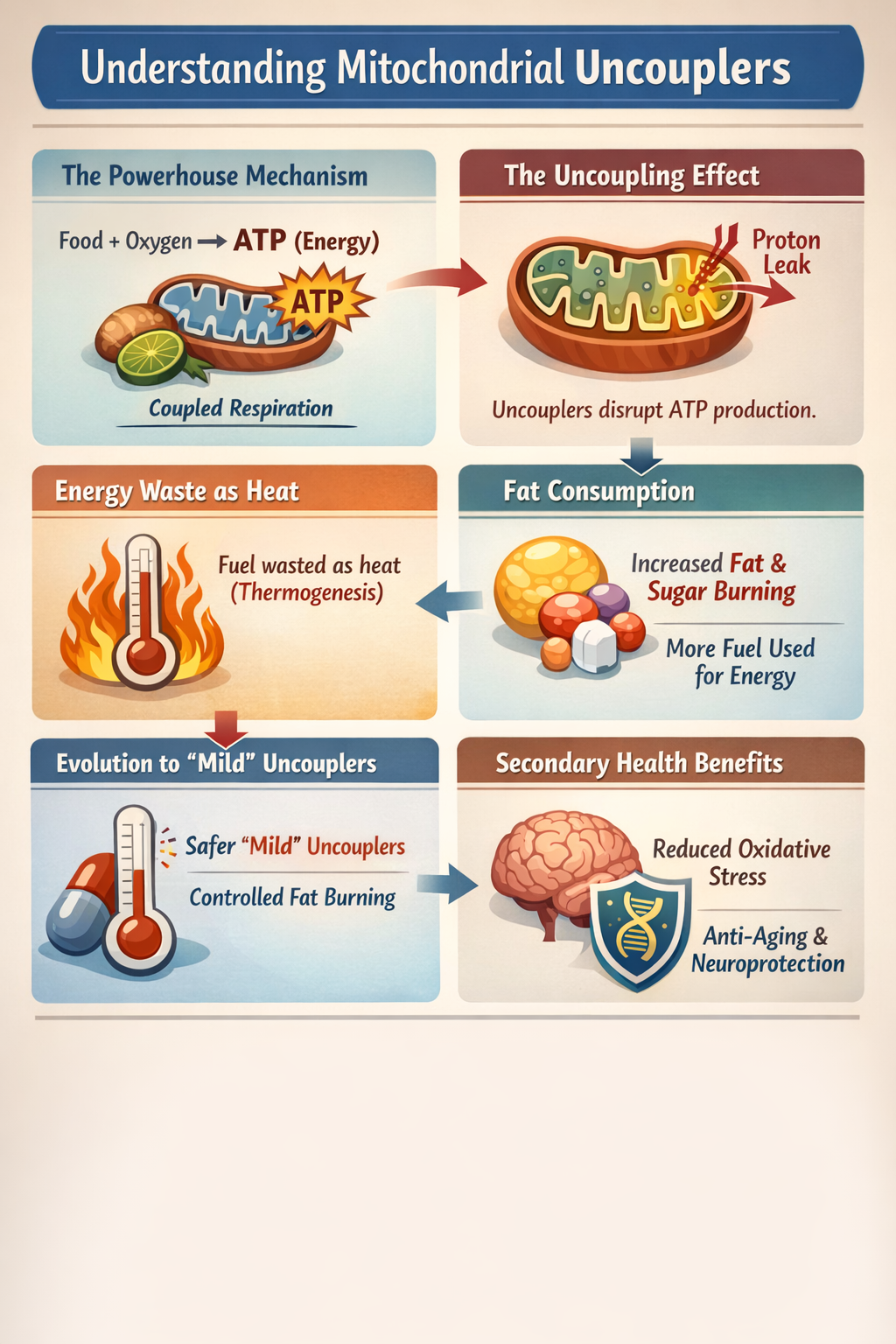
Understanding Mitochondrial Uncouplers
- The Powerhouse Mechanism: Mitochondria normally convert food into Adenosine Triphosphate (ATP), the body’s chemical energy currency, through a process called “coupled” respiration.
- The Uncoupling Effect: Uncouplers are molecules that disrupt this process by creating “leaks” in the mitochondrial membrane. This prevents protons from being used to create ATP.
- Energy Waste as Heat: Instead of being converted into usable energy, the fuel (calories) is “wasted” and released as heat (a process known as thermogenesis).
- Fat Consumption: To compensate for the loss of ATP, the body triggers cells to consume significantly more fats and sugars to meet its energy demands, leading to weight loss.
- Evolution to “Mild” Uncouplers: While older uncoupling drugs were lethal due to uncontrolled overheating, the new “mild” versions allow for fine-tuning, keeping the energy-burning process at a safe, handleable level.
- Secondary Health Benefits: By slowing the energy-burning process, these molecules reduce oxidative stress, which could offer anti-aging effects and protection against neurodegenerative diseases like dementia.
