


 Profile
 Settings
 Refer your friends
 Sign out




Why in News:
![]() Understanding In Silico Ecology
Understanding In Silico Ecology
- The discipline of ecology is undergoing a fundamental transformation, shifting from traditional outdoor fieldwork (“muddy boots”) to computer-based research driven by Artificial Intelligence and automated data streams.
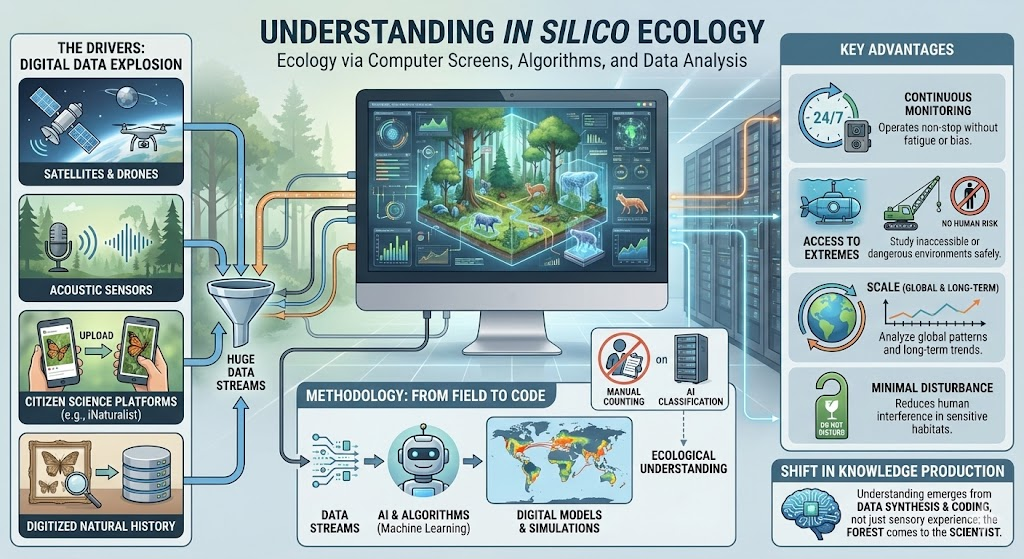
- Definition: It refers to ecological research carried out on computer screens using algorithms, simulations, and data analysis, rather than through direct physical immersion in nature.
- The Drivers: This shift is powered by an explosion of digital data from satellites, drones, acoustic sensors, and citizen science platforms (like iNaturalist), along with digitized natural history specimens.
- Methodology: Instead of manual counting, AI systems are used to classify species, track migration, and model distributions using data streams that flow directly to the scientist.
- Key Advantages:
- Continuous Monitoring: Unlike humans, robotic sensors and camera traps operate 24/7 without fatigue or bias.
- Access to Extremes: Allows study of inaccessible or dangerous environments (deep oceans, dense canopies) without risking human safety.
- Scale: Enables the analysis of global-scale patterns and long-term trends that individual fieldwork could never capture.
- Minimal Disturbance: Reduces human interference in sensitive habitats.
- Shift in Knowledge Production: Ecological understanding now emerges from data synthesis and coding rather than sensory experience; the forest effectively “comes to the scientist.”
