


 Profile
 Settings
 Refer your friends
 Sign out




Key Decisions:
![]()
- New slab structure:
- 5% (merit rate).
- 18% (standard rate).
- 40% (demerit rate) → super luxury, sin, and demerit goods (e.g., pan masala, tobacco, cigarettes).
- Existing 12% and 28% slabs removed.
- Reforms effective September 22, 2025 (Navratri start).
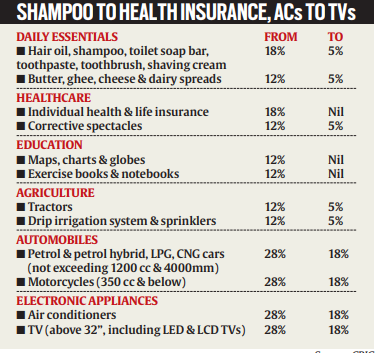
- Food & beverages: fruit juices, butter, cheese, condensed milk, pasta, coconut water, soya milk drinks, sausages → reduced to 5%.
- Nil GST: ultra-high temperature milk, chhena/paneer, pizza bread, khakra, plain roti/chapati, erasers.
- Household items: hair oil, soaps, shampoos, toothbrushes, toothpaste, bicycles, tableware, kitchenware → reduced to 5%.
- White goods: ACs, TVs, dishwashers → 18% (down from 28%).
- Vehicles:
- Small cars (≤1200cc petrol, ≤1500cc diesel, ≤4m length) → 18%.
- Motorcycles (<350cc) and all auto parts → 18%.
- Bigger cars → 40%.
- EVs unchanged at 5%.
- Life & health insurance (including senior citizens, ULIPs, term/life, endowment policies) → fully exempt.
- Gyms, salons, barbers, yoga centres → reduced to 5% (from 18%).
- Ease of doing business: Automated refunds, simpler registration.
- Correcting inverted duty structure → resolves cash flow issues for businesses.
- Support for labour-intensive industries, farmers, MSMEs, health sector.
- Expected to reduce daily burden on common citizens.
- The GST Council approved sweeping reforms, moving to a two-slab GST system (5% and 18%) with a 40% demerit rate, effective September 2025, marking a major step in rationalising India’s indirect tax regime.
