Profile
 Settings
 Refer your friends
 Sign out




Why in News?
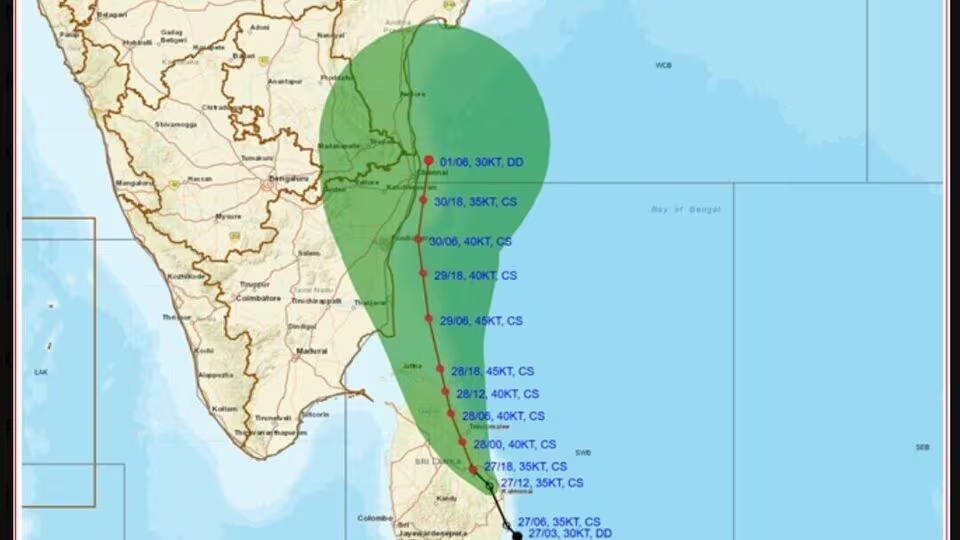
- Cyclone Ditwah has recently struck Sri Lanka killing dozens and displacing tens of thousands and is now heading toward South-India’s east coast.
What is a Cyclone?
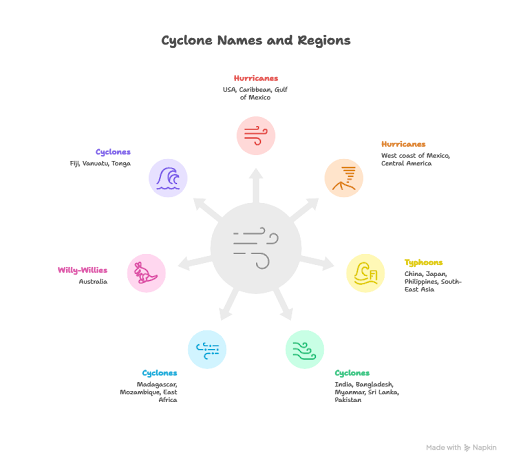
- A cyclone is a large rotating storm system that forms over warm ocean waters with low atmospheric pressure at the centre.
- It brings very strong winds, heavy rainfall, storm surges, and coastal flooding.
- In the Indian Ocean region, such storms are called tropical cyclones.
Naming of Cyclone Ditwah
- Cyclone names in the Indian Ocean region are assigned as per the World Meteorological Organization (WMO) regional agreement.
- The naming list is prepared by countries in the North Indian Ocean region, including India, Bangladesh, Myanmar, Sri Lanka, Thailand, Oman, and others.
- Each country contributes a set of names in advance.
- The name “Ditwah” was taken from this pre-approved list.
- Once a cyclone becomes strong enough to reach the cyclonic storm stage, the next name on the list is assigned.
- Naming helps in easy identification, clear communication, early warning, and disaster management.
Why Cyclone Naming is Important
- It avoids confusion when multiple cyclones exist at the same time.
- It helps media, governments, and disaster agencies communicate warnings clearly.
- It improves public awareness and evacuation preparedness.
- It supports international coordination during disaster response.
Season of Cyclones in the Bay of Bengal
- The Bay of Bengal experiences two main cyclone seasons every year.
- The pre-monsoon cyclone season occurs from April to June.
- The post-monsoon cyclone season occurs from October to December.
- The post-monsoon season is the most active and dangerous period for cyclones in the Bay of Bengal.
Why Bay of Bengal is Highly Prone to Cyclones
- The Bay of Bengal has very warm sea surface temperatures, which provide energy for cyclone formation.
- It receives large freshwater inflow from major rivers, which increases atmospheric instability.
- The region has favourable wind patterns for cyclone intensification.
- The surrounding coastlines are low-lying and densely populated, increasing vulnerability.