


 Profile
 Settings
 Refer your friends
 Sign out




Why in News?
- A Cuban gar was recently documented by a biologist in the Zapata Swamp, drawing attention to its critically endangered status and the threat posed by invasive species.
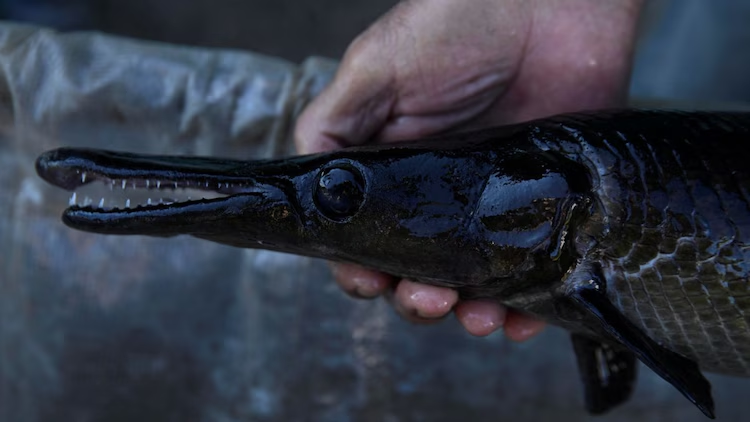
About Cuban Gar
- Scientific name: Atractosteus tristoechus.
- Common name: Cuban Gar or Manjuarí.
- It is a large freshwater predatory fish.
- Belongs to the gar family (Lepisosteidae), which are ancient fishes.
Geographic Distribution
- Endemic to Cuba (found only in Cuba).
- It lives mainly in freshwater rivers, lakes, swamps, and wetlands.
- Major habitats include the Zapata Swamp and other lowland wetlands.
Key Physical Features
- Long, elongated body with hard, diamond-shaped scales.
- Long snout with sharp teeth for catching prey.
- Can grow up to 2 metres in length.
- Has a swim bladder that functions like a lung, allowing it to breathe air in low-oxygen waters.
Ecological Role
- A top predator in freshwater ecosystems.
- Controls populations of smaller fish and maintains ecological balance.
- Indicator of healthy wetland ecosystems.
Conservation Status
- IUCN Red List: critically endangered.
- The population is declining.
- Not commonly found in global aquarium trade due to protection.
Major Threats
- Habitat loss due to wetland drainage and river modification.
- Overfishing for local consumption.
- Water pollution and reduced water flow.
- Climate change, affecting wetland ecosystems.
