


 Profile
 Settings
 Refer your friends
 Sign out




About:
- Launched: September 28, 2015, by PSLV-C30 from Sriharikota.
- Designed Life: 5 years, but still operational after 10 years.
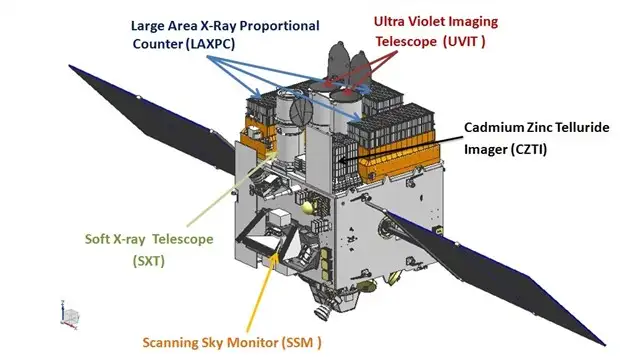
- Objective: To study the universe in multi-wavelengths – visible, ultraviolet, low and high energy X-rays – simultaneously.
- Key Discoveries: From black holes, neutron stars, Proxima Centauri, to the detection of FUV photons from galaxies 9.3 billion light-years away.
- Collaboration: Built by ISRO with support from IUCAA, TIFR, IIA, RRI, Indian universities, and partners from Canada & UK.
- Significance: Strengthened India’s position in space-based astronomy, complementing global observatories like NASA’s Chandra and Hubble.
- India’s first dedicated space astronomy observatory, AstroSat, has completed 10 years of successful operation since its launch on September 28, 2015.
