


 Profile
 Settings
 Refer your friends
 Sign out




Why in News?
- Adichanallur was in the news due to renewed discussions on its conservation and the development of a dedicated archaeological museum.
About Adichanallur Archaeological Site
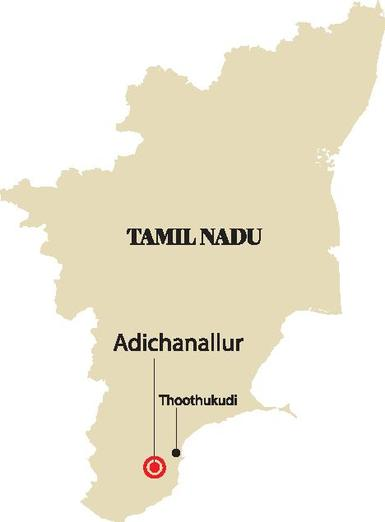
- Adichanallur is a major Iron Age (Megalithic) archaeological site located in Thoothukudi district, Tamil Nadu, and is protected by the Archaeological Survey of India (ASI).
- Excavations indicate continuous human activity dating back to 1000–1400 BCE, making it one of the oldest and richest burial sites in India.
- The site contains over 160 urn burials with human and animal remains, iron weapons, pottery, gold diadems, and ornaments, showing an advanced metalworking society with cultural complexity.
- Graffiti marks found on pottery provide important clues to early writing systems and proto-Dravidian cultural practices.
- The site’s location along the Tamirabarani river supports theories of early riverine civilisations in South India.
- The artefacts and burial patterns link Adichanallur to the broader Megalithic culture of South India, characterised by iron technology, urn burials, and long-distance trade.
- ASI excavations, beginning with Alexander Rea in the early 1900s, have reinforced its significance for studying early Tamil cultural evolution.
- Carbon dating from various layers has consistently placed the site within Iron Age chronology, making it a crucial reference point for South Indian prehistory.
- A proposed site museum is intended to preserve excavated artefacts and present research findings to the public.
DO YOU KNOW?Iron Age
|
