Access free live classes and tests on the app
Download
+
Unacademy
  • Goals
    • AFCAT
    • AP EAMCET
    • Bank Exam
    • BPSC
    • CA Foundation
    • CAPF
    • CAT
    • CBSE Class 11
    • CBSE Class 12
    • CDS
    • CLAT
    • CSIR UGC
    • GATE
    • IIT JAM
    • JEE
    • Karnataka CET
    • Karnataka PSC
    • Kerala PSC
    • MHT CET
    • MPPSC
    • NDA
    • NEET PG
    • NEET UG
    • NTA UGC
    • Railway Exam
    • SSC
    • TS EAMCET
    • UPSC
    • WBPSC
    • CFA
Login Join for Free
avtar
  • ProfileProfile
  • Settings Settings
  • Refer your friendsRefer your friends
  • Sign outSign out
  • Terms & conditions
  • •
  • Privacy policy
  • About
  • •
  • Careers
  • •
  • Blog

© 2023 Sorting Hat Technologies Pvt Ltd

Watch Free Classes
JEE Main 2026 Preparation: Question Papers, Solutions, Mock Tests & Strategy Unacademy » JEE Study Material » Mathematics » Learn About the Theorem of Implicit Function

Learn About the Theorem of Implicit Function

In this article we will cover the theorem of implicit function, proving the implicit function theorem, importance of implicit function theorem. The implicit function theorem is a tool for converting relations to functions with multiple real variables.

Table of Content
  •  

The implicit function theorem is a mechanism in mathematics that allows relations to be transformed into functions of various real variables, particularly in multivariable calculus. It is possible to do so by representing the relationship as a function graph. An individual function graph may not represent the entire relation, but such a function on a constraint of the relation’s domain may exist. The implicit function theorem provides a sufficient condition to ensure the existence of such a function.

Theorem of implicit function

According to the implicit function theorem, if that point is not a critical point, we can find coordinates near that point such that the function is a linear function in these coordinates. This is a very useful observation for reducing pseudo differential operators.

If a function with n equations is given, such that fi (x1,…, xn, y1,…, yn) = 0, where i = 1,…, n, or we can also represent as F(xi, yi) = 0, the implicit theorem states that, under a fair condition on the partial derivatives at a point, the m variables yi are differentiable functions of the xj in some section of the point. Because we cannot express these functions in closed form, the equations implicitly define them.

Example: 
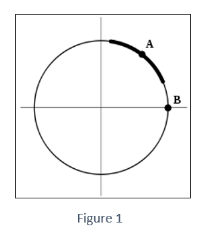
If we define f(x, y) = x2 + y2, then the equation f(x, y) = 1 cuts out the unit circle as the level set (x, y) | f(x, y) = 1. The unit circle cannot be represented as a graph of a function of one variable y = g(x) because there are two options for y for each choice of  x (-1, 1), namely 1-x2

However, a portion of the circle can be represented as the graph of a one-variable function. If we allow it,gx=1-x2 If −1 ≤ x ≤ 1 is given, then the graph of y=g1(x) gives the circle’s upper half Similarly ifg2 x=-1-x2  then there is the graph of y=g2(x) gives the circle’s lower half.

The implicit function theorem’s purpose is to tell us the existence of functions like g1(x) and g2(x)even when we can’t write down explicit formulas. It ensures that g1(x) and g2(x) are differentiable, and it even works when we don’t have a formula for f. (x, y).

Proving the implicit function theorem

Letf:Rn+mRm be a continuously differentiable function, and let Rn+m have coordinatesx,y. Fix a point a,b=(a1,…,an,b1,…,bm) with fa,b=0 where 0Rm is the zero vector. If the Jacobian matrix Jf,ya,b=fiyj(a,b) is invertible, then there exists an open setURncontaining a such that there exists a unique continuously differentiable function g:URm  such that ga=b, and fx,g(x)=0 for all x∈U. Moreover, denoting the left-hand panel of the Jacobian matric shown below as: Jf,xa,b=fixj(a,b),the The matrix product yields the Jacobian matrix of partial derivatives of g in U.

gixjxm×n=-Jf,yx,gxm×m Jf,xx,gxm×n

Proof for 2D Case:

Suppose F:R2R is a continuously differentiable function defining a curve Fr=Fx,y=0. Let(x0,y0) be a point on the curve. The statement of the theorem above can be rewritten for this simple case as follows:

Theorem-If  ∂y∂x|(x0,y0)≠0 then for the curve around(x0,y0) we can writey=f(x), where f is a real function.

Proof: We write the differential of F through partial derivatives because F is differentiable: F=graduation F.dr=∂F∂xdx+∂F∂ydy.

Since we are restricted to movement on the curve dF=0 and by assumption F∂x≠0 around the point(x0,y0) ( Since ∂F∂y is continuous at(x0,y0)and  ∂y∂x|(x0,y0)≠0).

As a result, we have the following first order ordinary differential equation::xF<∞,  yF<∞,yF≠0. From this we know that xFyF Lipschitz continuous in both x and y. Therefore, by Cauchy- Lipschitz theorem, there exists unique y(x) that is the solution to the given ODE with the initial condition Q.E.D.

Importance of implicit function theorem

  • An implicit function theorem is a tool in multivariable calculus that allows relations to be converted to functions with multiple real variables using a graphical representation of the function
  • The implicit function theorem seeks to convey the presence of functions such as g1(x) and g2(x)even when explicit formulas cannot be defined
  • The implicit function theorem ensures that the functions g1(x) and g2(x)can be differentiated
  • The implicit function theorem also applies when there is no formula for the function 

Conclusion

In this article, we conclude that the implicit function theorem is a tool in mathematics, more specifically in multivariable calculus that allows relations to be converted to functions of several real variables. It accomplishes this by representing the relationship as a graph of a function. There may not be a single function whose graph can represent the entire relation, but there may be such a function on a restriction of the relation’s domain. The implicit function theorem provides a sufficient condition to ensure the existence of such a function. The infinite-dimensional implicit function theorem is used to demonstrate the existence of solutions to nonlinear partial differential equations and to parameterize the space of solutions.

faq

Frequently asked questions

Get answers to the most common queries related to the IIT JEE Examination Preparation.

What exactly is economics based on the implicit function theorem?

 The implicit function theorem states that if you can solve the system at a given x...Read full

How does the Implicit Function Theorem work?

The Implicit Function Theorem ensures that there is a function f(x,y)...Read full

Why Is the Implicit Function Used? Theorem is a great theorem.

In general, if you are given a system of k nonlinear equations with k unknowns, it is not only impossible to solve; ...Read full

What is the purpose of the implicit function theorem?

The implicit function theorem is a tool in mathematics that allows relations to be converted to functions of several...Read full

What exactly is the implicit function?

An implicit function is one that is defined by an implicit equation. That is, the equation contains several variable...Read full

 The implicit function theorem states that if you can solve the system at a given x0, you can solve the system in its neighborhood. It also provides expressions for the derivatives of the solution function.

The Implicit Function Theorem ensures that there is a function f(x,y) defined for (x,y) near (1,1) such that F(x,y,z)=1 when z=f (x,y). when z equals f (x,y). Now we distinguish both sides in terms of x. The derivative of the right-hand side is obviously 0.

In general, if you are given a system of k nonlinear equations with k unknowns, it is not only impossible to solve; it is also (practically) impossible to determine whether it has any solution.

The implicit function theorem is a tool in mathematics that allows relations to be converted to functions of several real variables. It is most commonly found in multivariable calculus. It accomplishes this by representing the relationship as a function graph.

An implicit function is one that is defined by an implicit equation. That is, the equation contains several variables, including dependent and independent variables. In other words, it is an equation that connects one of the variables, known as the function’s value, with the others, known as the arguments.

Crack IIT JEE with Unacademy

Get subscription and access unlimited live and recorded courses from India’s best educators

  • Structured syllabus
  • Daily live classes
  • Ask doubts
  • Tests & practice
Learn more

Notifications

Get all the important information related to the JEE Exam including the process of application, important calendar dates, eligibility criteria, exam centers etc.

Allotment of Examination Centre
JEE Advanced Eligibility Criteria
JEE Advanced Exam Dates
JEE Advanced Exam Pattern 2023
JEE Advanced Syllabus
JEE Application Fee
JEE Application Process
JEE Eligibility Criteria 2023
JEE Exam Language and Centres
JEE Exam Pattern – Check JEE Paper Pattern 2024
JEE Examination Scheme
JEE Main 2024 Admit Card (OUT) – Steps to Download Session 1 Hall Ticket
JEE Main Application Form
JEE Main Eligibility Criteria 2024
JEE Main Exam Dates
JEE Main Exam Pattern
JEE Main Highlights
JEE Main Paper Analysis
JEE Main Question Paper with Solutions and Answer Keys
JEE Main Result 2022 (Out)
JEE Main Revised Dates
JEE Marking Scheme
JEE Preparation Books 2024 – JEE Best Books (Mains and Advanced)
Online Applications for JEE (Main)-2022 Session 2
Reserved Seats
See all

Related articles

Learn more topics related to Mathematics
Zero Vector

A zero vector is defined as a line segment coincident with its beginning and ending points. Primary Keyword: Zero Vector

ZERO MATRIX

In this article, we will discuss about the zero matrix and it’s properties.

YARDS TO FEET

In this article we will discuss the conversion of yards into feet and feets to yard.

XVI Roman Numeral

In this article we are going to discuss XVI Roman Numerals and its origin.

See all
Access more than

10,505+ courses for IIT JEE

Get subscription
Company Logo

Unacademy is India’s largest online learning platform. Download our apps to start learning


Starting your preparation?

Call us and we will answer all your questions about learning on Unacademy

Call +91 8585858585

Company
About usShikshodayaCareers
we're hiring
BlogsPrivacy PolicyTerms and Conditions
Help & support
User GuidelinesSite MapRefund PolicyTakedown PolicyGrievance Redressal
Products
Learner appLearner appEducator appEducator appParent appParent app
Popular goals
IIT JEEUPSCSSCCSIR UGC NETNEET UG
Trending exams
GATECATCANTA UGC NETBank Exams
Study material
UPSC Study MaterialNEET UG Study MaterialCA Foundation Study MaterialJEE Study MaterialSSC Study Material

© 2026 Sorting Hat Technologies Pvt Ltd

Unacademy
  • Goals
    • AFCAT
    • AP EAMCET
    • Bank Exam
    • BPSC
    • CA Foundation
    • CAPF
    • CAT
    • CBSE Class 11
    • CBSE Class 12
    • CDS
    • CLAT
    • CSIR UGC
    • GATE
    • IIT JAM
    • JEE
    • Karnataka CET
    • Karnataka PSC
    • Kerala PSC
    • MHT CET
    • MPPSC
    • NDA
    • NEET PG
    • NEET UG
    • NTA UGC
    • Railway Exam
    • SSC
    • TS EAMCET
    • UPSC
    • WBPSC
    • CFA

Share via

COPY