UPI vs Strait of Hormuz UPSC: Notes, MCQs, Map, Current Affairs & Prelims Questions 2026
QUICK SUMMARY
The Strait of Hormuz is one of the most strategically important and most frequently examined geographic locations in UPSC Prelims. It appears across multiple sections of the examination - World Geography, International Relations, Energy Security, and Current Affairs - making it a high-priority topic for UPSC 2026. This guide covers complete geography notes, location details, map context, current affairs significance, Prelims MCQs with detailed answer explanations, statement-based questions, one-liners for quick revision, and questions from UPSC Prelims 2026.
Strait of Hormuz - Geography and Location Notes for UPSC
Strait of Hormuz geography for UPSC is the foundation of all questions on this topic. Every MCQ and statement-based question draws from this factual base - know every detail below.
Location and Physical Features
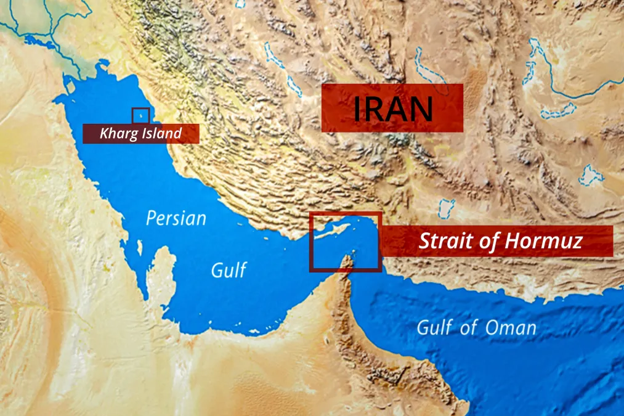
The Strait of Hormuz is a narrow waterway located between the Persian Gulf (also called the Arabian Gulf) to the west and the Gulf of Oman (which connects to the Arabian Sea) to the east. It is the only maritime passage connecting the Persian Gulf to the open ocean.
Key geographic facts:
| Parameter |
Detail |
| Location |
Between Persian Gulf and Gulf of Oman |
| Countries Bordering |
Iran (north) and Oman (south, including the Musandam Peninsula) |
| Width (narrowest point) |
Approximately 33–39 km (21–24 miles) |
| Depth |
Average approximately 60–100 metres |
| Shipping Lanes |
Two 3-km wide inbound and outbound lanes, separated by a 3-km buffer zone |
| Direction |
Runs roughly NW–SE |
| Connected Water Bodies |
Persian Gulf (west) ↔ Gulf of Oman → Arabian Sea (east) |
Countries Bordering the Strait of Hormuz
This is one of the most frequently tested factual details:
- Iran - forms the northern coastline of the Strait
- Oman - forms the southern coastline, specifically through the Musandam Peninsula (an exclave of Oman separated from the rest of the country by UAE territory)
- United Arab Emirates (UAE) - does not directly border the Strait itself but has coastline along the Persian Gulf that connects to the Strait's western approaches
Important distinction for UPSC: The countries that actually border the Strait of Hormuz are Iran and Oman (via Musandam). UAE is often mentioned as a nearby country but does not have a direct coastline on the Strait itself.
Strait of Hormuz Map Context for UPSC
Map-based questions on the Strait of Hormuz require you to place it correctly in the broader regional geography. Key locational relationships to know:
- The Strait connects the Persian Gulf (surrounded by Iran, Iraq, Kuwait, Saudi Arabia, Bahrain, Qatar, UAE, and Oman) to the Gulf of Oman
- The Gulf of Oman then connects to the Arabian Sea
- The Arabian Sea connects to the Indian Ocean
- Therefore, the Strait of Hormuz is the critical chokepoint between the landlocked Persian Gulf oil producers and global maritime trade routes
Nearby significant locations:
- Strait of Malacca - connects Andaman Sea to South China Sea (often asked in comparison)
- Bab-el-Mandeb - connects Red Sea to Gulf of Aden (another critical chokepoint in the region)
- Suez Canal - connects Red Sea to Mediterranean Sea
- Strait of Hormuz, Bab-el-Mandeb, and Suez Canal together form the triple chokepoint system for energy trade from the Gulf to Europe and Asia
Strait of Hormuz - Strategic and International Relations Significance
Strait of Hormuz international relations UPSC context is essential - the Strait's strategic importance makes it relevant not just as a geography topic but as an IR and energy security topic for GS Paper 2 and GS Paper 3 Mains.
Energy Chokepoint - The World's Most Important
The Strait of Hormuz is the world's most critical energy chokepoint. According to the US Energy Information Administration (EIA):
- Approximately 20–21 million barrels of oil per day pass through the Strait - roughly 20% of global oil trade and approximately 25% of global LNG (Liquefied Natural Gas) trade
- The Persian Gulf countries that depend on the Strait for oil exports include: Saudi Arabia, Iraq, Kuwait, UAE, Qatar, Bahrain, and Iran
- There is no viable alternative route for most Persian Gulf oil exports - pipeline alternatives (like the Saudi Arabian East-West Pipeline and the Abu Dhabi Crude Oil Pipeline to Fujairah) can bypass the Strait but have significantly lower capacity than the Strait handles
India's Specific Interest in the Strait of Hormuz
The Strait of Hormuz is of direct strategic importance to India:
- India imports approximately 85% of its crude oil, with a significant share coming from Persian Gulf countries (Saudi Arabia, Iraq, UAE, Kuwait) - all of which export through the Strait
- India's energy security is therefore directly linked to the Strait remaining open for maritime commerce
- India has a large diaspora in the Persian Gulf region (approximately 8–9 million Indian workers) - any conflict in the region has direct implications for Indian citizens
- Remittances from the Gulf region are a significant component of India's foreign exchange receipts
Iran's Threat to Close the Strait
Iran has periodically threatened to close the Strait of Hormuz in response to sanctions or military pressure - most recently during escalations in the Iran-US standoff following the JCPOA (Iran Nuclear Deal) collapse. This threat is credible because Iran borders the Strait on its northern side and possesses naval and missile capabilities that could disrupt shipping, even if a full closure would also harm Iranian oil exports.
Strait of Hormuz Statement-Based Questions
Strait of Hormuz statement-based questions - the format most commonly used in UPSC Prelims:
Statement Q1. Consider the following statements:
- The Strait of Hormuz is the only sea passage between the Persian Gulf and the open ocean.
- Oman's coastline on the Strait is formed by the Musandam Peninsula, which is an exclave separated from mainland Oman by UAE territory.
- The Strait of Hormuz handles approximately 50% of global oil trade.
- Iran has historically threatened to close the Strait in response to sanctions.
How many statements are correct?
(a) Only one
(b) Only two
(c) Only three ✓
(d) All four
Answer: (c) Statements 1, 2, and 4 are correct. Statement 3 is incorrect - approximately 20% (not 50%) of global oil trade passes through the Strait.
Statement Q2. Which of the following statements about the Strait of Hormuz is/are correct?
- It is located between Iran to the south and Oman to the north.
- The narrowest point of the Strait is approximately 33–39 km wide.
- Liquefied Natural Gas (LNG) from Qatar also transits through the Strait.
- The Strait connects the Gulf of Oman to the Red Sea.
(a) 2 and 3 only ✓
(b) 1 and 4 only
(c) 1, 3 and 4 only
(d) 1, 2, 3 and 4
Answer: (a) Statement 1 is incorrect - Iran is to the north, Oman to the south (directions reversed). Statement 4 is incorrect - the Strait connects the Persian Gulf to the Gulf of Oman (not the Red Sea). Statements 2 and 3 are correct - the narrowest point is ~33–39 km, and Qatar's massive LNG exports (Qatar is the world's largest LNG exporter) transit through the Strait.
Strait of Hormuz One-Liners for UPSC Revision
- Strait of Hormuz connects Persian Gulf (west) with Gulf of Oman (east)
- Bordering countries: Iran (north) and Oman (south, via Musandam Peninsula)
- Musandam Peninsula is an exclave of Oman - separated from mainland Oman by UAE
- Narrowest point: approximately 33–39 km wide
- Handles approximately 20% of global oil trade and 25% of global LNG trade
- World's most important oil and gas chokepoint
- Major oil exporters dependent on it: Saudi Arabia, Iraq, Kuwait, UAE, Qatar, Iran
- India imports ~85% of its crude oil, significant share from Gulf countries via this Strait
- Alternative pipelines: Saudi's East-West Pipeline (Yanbu) and UAE's Habshan-Fujairah Pipeline
- Iran has periodically threatened to close the Strait in response to sanctions
- India's Operation Sankalp - naval mission to protect Indian vessels in the Gulf of Oman
- Related straits: Bab-el-Mandeb (Red Sea–Gulf of Aden), Malacca (Indian Ocean–South China Sea)
- Strait of Hormuz + Bab-el-Mandeb + Suez Canal = triple chokepoint for Gulf energy to world
- Qatar, the world's largest LNG exporter, transits all exports through this Strait
UPSC Prelims 2026 PYQ
Q. Ships from which of the following countries have to cross the Strait of Hormuz to reach out to the Indian Ocean?
- Bahrain
- Syria
- Qatar
- Egypt
Select the correct answer using the code given below:
(a) 1 and 2
(b) 1 and 3
(c) 2 and 3
(d) 3 and 4
Answer: (b) 1 and 3
Explanation
Statement 1 – Correct
Bahrain is located in the Persian Gulf; ships must pass through the Strait of Hormuz to reach the Indian Ocean.
Statement 2 – Incorrect
Syria has a coastline on the Mediterranean Sea, so it does not use the Strait of Hormuz.
Statement 3 – Correct
Qatar is also located in the Persian Gulf and requires passage through the Strait of Hormuz.
Statement 4 – Incorrect
Egypt primarily accesses international waters through the Mediterranean Sea and the Red Sea, not via the Strait of Hormuz.
UPSC Learning from this Question
The question tested:
- Map-based geography
- Location of countries around the Persian Gulf
- Strait of Hormuz as a maritime chokepoint
- Elimination through knowledge of sea routes
This indicates UPSC's preference for applying geographic concepts rather than asking direct factual questions about the Strait itself.
Expected Strait of Hormuz Questions for UPSC Mains 2026
Based on its strategic importance, recurring Gulf tensions, concerns over global energy security, and its significance for India's trade and oil imports, the Strait of Hormuz is a potential topic for GS Paper II (International Relations) and GS Paper III (Economy and Security).
1. Strategic Importance of the Strait of Hormuz
Q. Why is the Strait of Hormuz considered one of the world's most critical maritime chokepoints? Discuss its significance for global energy security and international trade. (15 Marks)
Key Areas
- Geographic location between the Persian Gulf and Gulf of Oman
- Major route for crude oil and LNG exports
- Importance for global supply chains
- Vulnerability to disruptions
- Impact on global energy prices
2. Strait of Hormuz and India's Energy Security
Q. Examine the significance of the Strait of Hormuz for India's energy security. What measures should India adopt to mitigate risks arising from disruptions in the region? (15 Marks)
Key Areas
- Dependence on Gulf countries for crude oil imports
- Impact of disruptions on inflation and current account deficit
- Strategic Petroleum Reserves (SPR)
- Diversification of energy sources
- Renewable energy and green hydrogen initiatives
- Maritime diplomacy
3. Geopolitics of the Gulf Region
Q. The Strait of Hormuz has become a focal point of geopolitical competition in West Asia. Analyse the factors contributing to tensions in the region and their global implications. (15 Marks)
Key Areas
- Iran-US tensions
- Sanctions on Iran
- Regional rivalries
- Security of shipping lanes
- Impact on global energy markets
- Role of external powers
4. Maritime Chokepoints and Global Trade
Q. Discuss the importance of maritime chokepoints in international trade. Examine the strategic significance of the Strait of Hormuz in comparison with other major chokepoints such as Bab-el-Mandeb and the Strait of Malacca. (15 Marks)
Key Areas
- Concept of maritime chokepoints
- Hormuz, Malacca, Bab-el-Mandeb
- Trade and energy flows
- Security concerns
- Geopolitical vulnerabilities
5. Regional Instability and Global Economy
Q. How can conflicts and instability around the Strait of Hormuz affect the global economy? Discuss with special reference to developing countries such as India. (10 Marks)
Key Areas
- Rise in crude oil prices
- Inflationary pressures
- Supply chain disruptions
- Trade deficits
- Economic growth implications
6. India's Maritime Strategy
Q. In the context of increasing uncertainties in West Asia, evaluate India's maritime and diplomatic strategy for safeguarding its energy and trade interests. (15 Marks)
Key Areas
- SAGAR doctrine
- Naval deployments
- Strategic partnerships with Gulf countries
- Energy diversification
- Blue Economy and maritime security
7. Strait of Hormuz and International Maritime Law
Q. Discuss the relevance of international maritime law in ensuring freedom of navigation through strategic waterways such as the Strait of Hormuz. (10 Marks)
Key Areas
- UNCLOS principles
- Freedom of navigation
- Transit passage
- Security concerns
- Balancing sovereignty and global commerce
Most Probable UPSC Mains 2026 Question
Q. The Strait of Hormuz remains central to global energy security and regional geopolitics. Discuss its strategic significance and analyse the implications of any disruption in the Strait for India's economy and energy security. (15 Marks)
Why is this the most likely question?
It combines the most important dimensions currently associated with the Strait of Hormuz:
- Global energy security
- Gulf geopolitics
- Maritime chokepoints
- India's oil dependence
- Economic and strategic implications of regional conflicts
This makes it a strong GS-II and GS-III crossover topic for UPSC Mains 2026.




 Profile
 Settings
 Refer your friends
 Sign out