An elderly worker under the MGNREGS died in Ernakulam, Kerala, from Primary Amoebic Meningoencephalitis, a fatal brain infection suspected to be contracted by washing her face with contaminated canal water.
Primary Amoebic Meningoencephalitis (PAM):
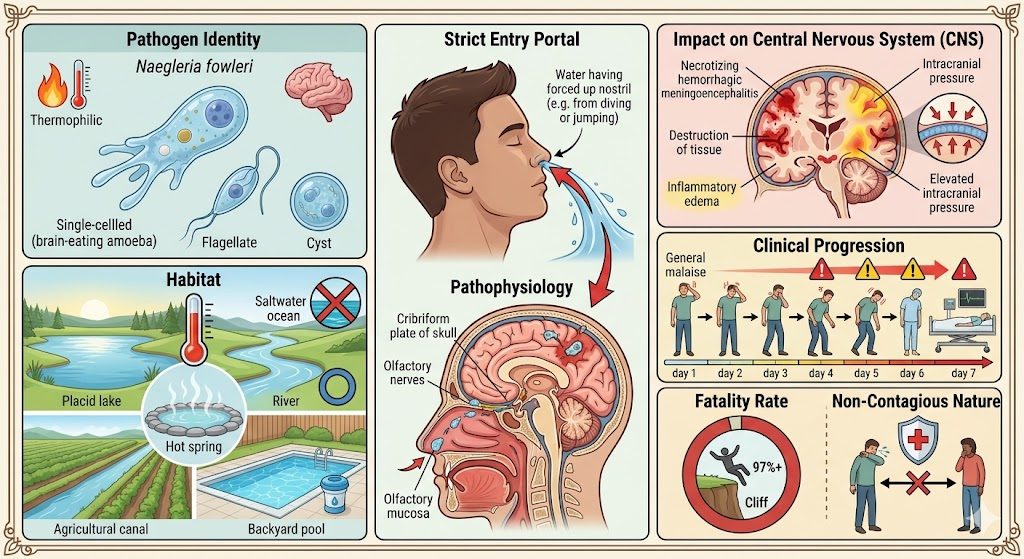
Pathogen Identity: Caused by Naegleria fowleri, a heat-loving (thermophilic), single-celled, free-living amoeba commonly referred to as the “brain-eating amoeba.”
Habitat: Naturally thrives in warm freshwater environments such as lakes, rivers, hot springs, agricultural canals, and poorly chlorinated swimming pools, but cannot survive in saltwater.
Strict Entry Portal: Infection occurs exclusively when contaminated water is forced up the nasal cavity; it cannot be contracted by swallowing or drinking contaminated water.
Pathophysiology: The amoeba penetrates the nasal olfactory mucosa, migrates along the olfactory nerves, crosses the cribriform plate of the skull, and directly enters the brain parenchyma.
Impact on Central Nervous System (CNS): Triggers severe necrotizing hemorrhagic meningoencephalitis, causing rapid destruction of brain tissue, intense inflammatory edema, and elevated intracranial pressure.
Clinical Progression: Early symptoms like acute fever, headache, and vomiting rapidly progress to a stiff neck, confusion, loss of balance, and seizures, typically leading to coma and death within 5 to 7 days of symptom onset.
Fatality Rate: Exceptionally lethal with a global mortality rate exceeding 97%, making early diagnosis critical yet highly challenging due to symptoms mimicking routine bacterial or viral meningitis.
Non-Contagious Nature: The disease is entirely non-communicable; it cannot be transmitted from one person to another.




 Profile
 Settings
 Refer your friends
 Sign out