UPSC » With reference to Unmanned Aerial Vehicles (UAVs), consider the following statements

With reference to Unmanned Aerial Vehicles (UAVs), consider the following statements

Q. With reference to Unmanned Aerial Vehicles (UAVs), consider the following statements

I. All types of UAVs can do vertical landing.
II. All types of UAVs can do automated hovering.
III. All types of UAVs can use batteries only as a source of power supply.

How many of the statements given above are correct?

(a) Only one
(b) Only two
(c) All the three
(d) None

2. मानव-रहित वायव वाहनों (UAV) के संदर्भ में, निम्नलिखित कथनों पर विचार कीजिए:

I. सभी प्रकार के UAV ऊर्ध्वाधर अवतरण (लैंडिंग) कर सकते हैं।
II. सभी प्रकार के UAV स्वतः मंडरा सकते हैं।
III. सभी प्रकार के UAV शक्ति पूर्ति के स्रोत के रूप में केवल बैटरी का प्रयोग कर सकते हैं।

उपर्युक्त कथनों में से कितने सही हैं?

(a) केवल एक
(b) केवल दो
(c) सभी तीन
(d) कोई नहीं

Answer: (d) None

Explanation:

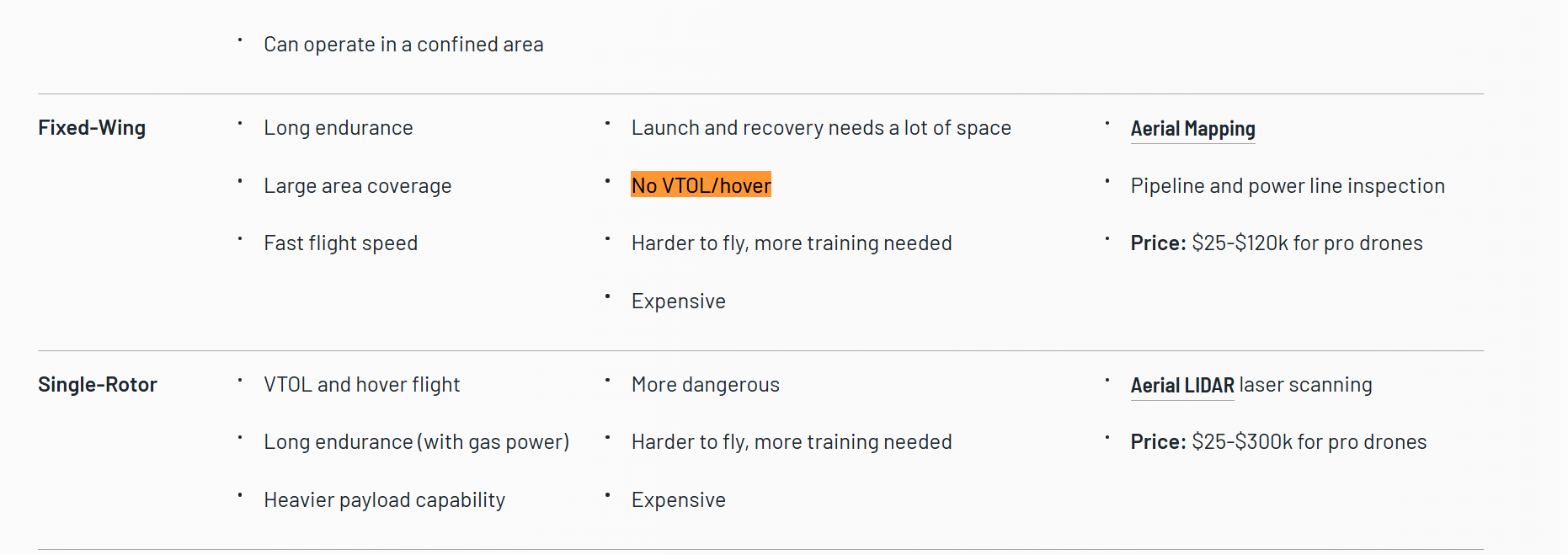
  • Statement I is incorrect: Not all types of UAVs (Unmanned Aerial Vehicles) can do vertical landing. Vertical takeoff and landing (VTOL) capabilities are primarily associated with certain types of UAVs, particularly those designed with rotor systems like multirotor drones. While some hybrid fixed-wing VTOL drones exist, traditional fixed-wing drones typically require runways or catapult systems for takeoff and landing.
  • Statement II is incorrect: Not all types of Unmanned Aerial Vehicles (UAVs) can perform automated hovering. Fixed-wing UAVs are designed for horizontal takeoff and landing (HTOL) and lack the ability to hover, while multi-rotor UAVs (also called rotary-wing UAVs) have the advantage of vertical take-off and landing (VTOL) and hovering capabilities
  • Statement III is incorrect: Not all types of UAVs rely solely on batteries for power. While many smaller, lighter UAVs use batteries as their primary power source, larger or those requiring extended flight times often utilize hybrid or alternative power systems.

Source:https://www.auav.com.au/articles/drone-types/