Q. With reference to ‘Direct Air Capture’ an emerging technology, which of the following statements is/are correct?
I. It can be used as a way of carbon sequestration.
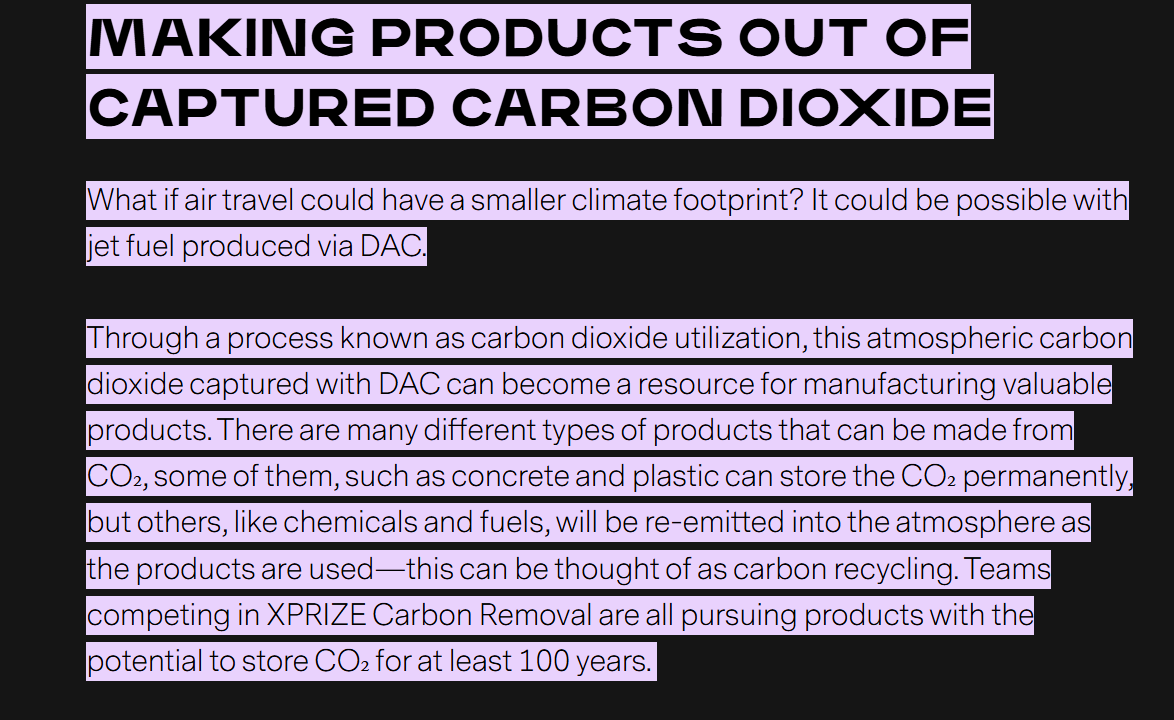
II. It can be a valuable approach for plastic production and in food processing.
III. In aviation, it can be a source of carbon for combining with hydrogen to create synthetic low-carbon fuel.
Select the correct answer using the code given below.
(a) I and II only
(b) III only
(c) I, II and III
(d) None of the above statements is correct
16. 'प्रत्यक्ष वात प्रग्रहण (डाइरेक्ट एयर कैप्चर)', जो नई उभरती प्रौद्योगिकी है, के संदर्भ में, निम्नलिखित कथनों में से कौन-सा/कौन-से सही है/हैं?
I. इसे कार्बन प्रच्छादन की एक विधि के रूप में प्रयोग में ला सकते हैं।
II. यह प्लास्टिक उत्पादन हेतु और खाद्य प्रसंस्करण में एक बहुमूल्य उपागम हो सकता है।
III. विमानन में, यह संश्लिष्ट न्यून-कार्बन ईंधन जनन हेतु हाइड्रोजन में मिलाने के लिए कार्बन का स्रोत हो सकता है।
नीचे दिए गए कूट का प्रयोग कर सही उत्तर चुनिए।
(a) केवल I और II
(b) केवल III
(c) I, II और III
(d) उपर्युक्त कथनों में से कोई भी सही नहीं है
Correct Answer: (c)
Explanation:
Statement I is correct:
Direct Air Capture (DAC) can be used as a method of carbon sequestration.
- Direct Air Capture (DAC) is an emerging technology that removes carbon dioxide (CO₂) directly from the atmosphere through chemical processes.
- The captured CO₂ can be permanently stored underground (geological sequestration) or utilized in industrial applications, helping reduce atmospheric carbon levels.
- Thus, DAC serves as a significant approach for carbon sequestration and climate change mitigation.
Statement II is correct:
DAC can be valuable for plastic production and food processing.
- The captured CO₂ can be used as a feedstock in industrial processes.
- In plastic production, CO₂ can be chemically converted into materials such as polycarbonates and other industrial chemicals.
- In food processing, purified CO₂ is used for carbonation of beverages, food packaging, chilling, and freezing applications.
Statement III is correct:
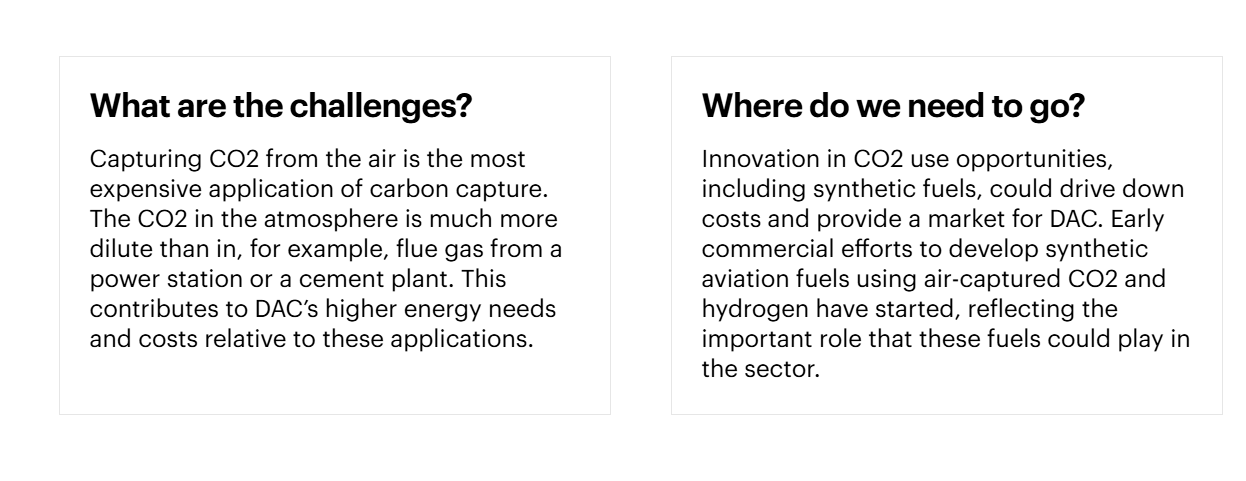
In aviation, DAC can provide carbon for producing synthetic low-carbon fuels.
- Captured CO₂ from DAC can be combined with green hydrogen (produced using renewable energy) to create synthetic fuels (e-fuels or synthetic kerosene).
- These fuels are considered low-carbon alternatives, especially for sectors like aviation, where large-scale electrification remains difficult.
Conclusion:
- Statement I is correct because DAC removes and stores atmospheric CO₂.
- Statement II is correct because captured CO₂ has industrial applications, including plastics and food processing.
- Statement III is correct because DAC-derived CO₂ can be used to create synthetic aviation fuels.
- Therefore, all three statements are correct.
Hence, the correct answer is (c) I, II and III.
Source :
https://www.iea.org/energy-system/carbon-capture-utilisation-and-storage/direct-air-capture
https://www.energy.gov/science/doe-explainsdirect-air-capture
2nd solution
![]()
https://www.iea.org/energy-system/carbon-capture-utilisation-and-storage/direct-air-capture
![]()




 Profile
 Settings
 Refer your friends
 Sign out