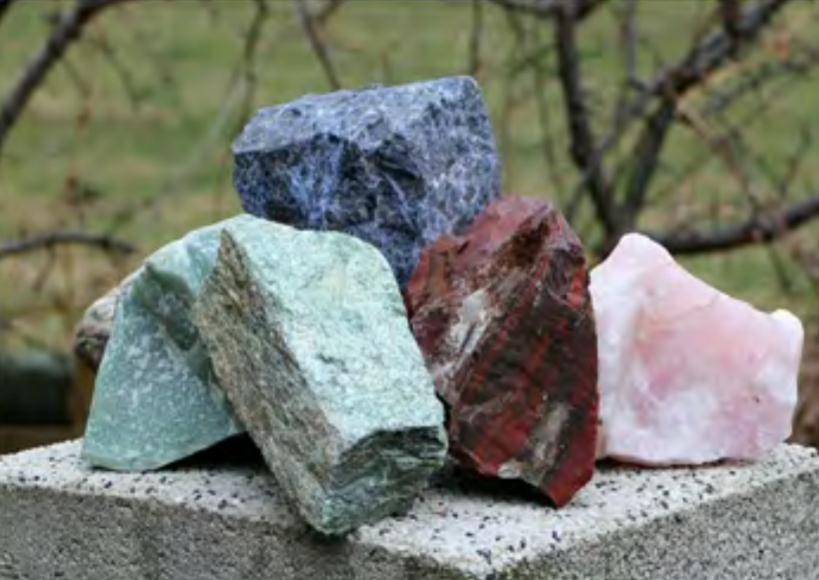
Earth is filled with various minerals, and nearly 3,000 different kinds of minerals are found on the earth’s surface. The study of minerals is known as mineralogy. Some of the popular minerals are chromite, bauxite, feldspar, copper, aluminium and many more.
Minerals can be defined as naturally occurring substances with a definite chemical composition. They have been formed under very high pressure for thousands of years. Various minerals are extracted by their rock ores mined from the earth. Some of the characteristics of minerals are –
Here are some of the common minerals which are available in India –
Manganese is among the most used minerals in India. It is generally used to produce stainless steel and many other alloys. Manganese is also used in developing paint pigments used in houses. Besides, it is a major component in the pesticides industry.
Iron ore is vastly used worldwide for extracting iron and other ferrous minerals. It is used for various purposes, including its utility in manufacturing units, the automobile industry, home appliances, and many more. The magnetic properties of this mineral increase its usability.
Limestone is a non-ferrous mineral generally used in the construction of buildings and different architecture. It is used for the production of cement, toothpaste and paint pigments. Besides, it is a beneficial chemical component used to make lime and other chemical products.
Thorium is a radioactive mineral generally used as a catalyst in industries. Thorium has a good utility since it can be used to produce nuclear power. This energy can fuel many industries and even replace non-renewable energy sources. Thorium is handy when it comes to radiometric dating. It is also used to coat tungsten wire in electrical equipment. Lenses for cameras and scientific devices are made with this material.
Extraction of minerals is time-consuming and laborious, and there are various techniques to do so. These techniques depend on the types of minerals to be extracted.
The mining process is carried out for minerals that are below the earth’s surface. There are two types of mining processes, Open-cast mining and Shaft mining. Open-cast mining is the process of extracting minerals from shallow depths of the earth’s surface, while Shaft mining is where deep bores or ‘shafts’ are dug to extract minerals.
Drilling is a process that is generally carried out in oceans and seas. It is an expensive process where deep wells are bored down the ocean surface to extract minerals. It is usually used to extract petroleum and natural gas.
Quarrying is an extraction process in which minerals that are available easily on the earth’s surface are taken out. This process is cheaper.
Minerals can be classified into two groups: Metallic and Non-metallic. The major difference between these two types of minerals is that metallic minerals have a shine and lustre while non-metallic minerals are devoid of these properties.
Metallic minerals are made up of metals in their natural state and have a crystalline atomic structure. Ferrous minerals and non-ferrous minerals make up metallic minerals.
Ferrous minerals are metallic minerals that contain iron and are often robust and durable. Except for Mercury (Hg), ferrous minerals are primarily found in solid form. The following are India’s key iron ore belts:
(b) Non-ferrous Minerals
Non-ferrous minerals do not contain iron ore and fall under the category of Minerals and Energy Resources. Copper and bauxite are examples of this kind of mineral. In India:
Non-metallic minerals are inorganic substances that do not have metallic attributes. These minerals lack metals and a crystalline structure, making them poor electrical conductors. However, their molecules are closely packed inside the atomic structure, giving them the property of being semi-permeable. Coal, petroleum, limestone, and mica are examples of non-metallic minerals. The major deposits of non-metallic minerals in India are found in the northern tip of the Chota Nagpur Plateau. These minerals can be found in rocks that contain calcium carbonates or magnesium carbonates. It is an important raw material for the cement industry and is required for blast-furnace smelting of iron ore.
Minerals play a vital role in human life. Different types of minerals, ferrous or non-ferrous, are useful for various purposes. Cement, ceramics, glass, and lime products are among the most well-known non-metallic minerals goods. The application range of minerals is fairly extensive, encompassing anything from construction materials to sanitary ware to tableware and ornamental items. Metallic minerals have great prominence in machine-manufacturing, chemical and other metal-based industries.
Energy Minerals: Energy minerals are raw materials used in the energy industry. Examples of Energy minerals are oil, petroleum, natural gas, bituminous sandstone and limestone, oil shale, coal, lignite, peat, thorium, uranium.



 Profile
 Settings
 Refer your friends
 Sign out