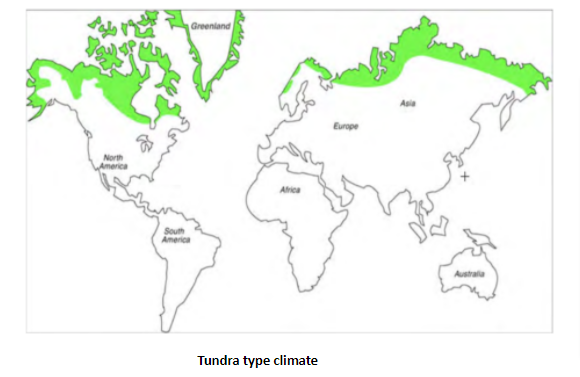
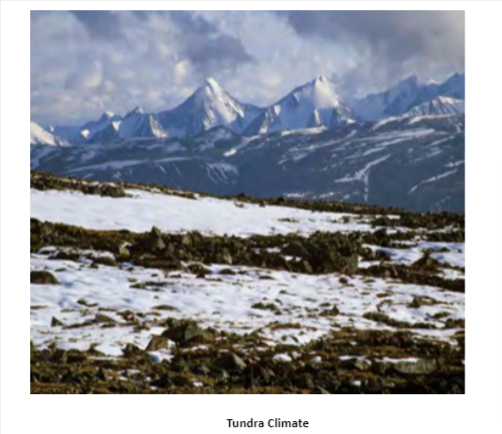
The Tundra ecosystem is one with an absence of trees and is covered with snow for the majority of the year. This type of ecosystem can mostly be found in cold climates and places with little rainfall. This climate is found in places with lower altitudes and is very similar to deserts, because of their severe climate. They can be found in regions extending across North America, Europe, and Siberia moving towards Asia. The majority of Alaska and Canada cover the Tundra ecosystem. They have extremely long, dark, and cold winters and rarely have summer seasons throughout the year. Plantations and flowers can rarely be found in these places because they are always covered with snow. There are two major ecosystems in the Tundra, which are the Arctic and Alpines. The Arctic tundra is much colder when compared to the Alpine tundra.
There are three types of Tundra regions that can be seen in the world which are Arctic Tundra, Alpine Tundra, and Antarctic Tundra:
The climate that is found in this ecosystem is extremely low in annual temperature. In winters, the temperatures go as low as 40 degrees Celsius below the freezing point. However, the summers are warmer compared to the winters experienced there. There are also days and weeks of darkness experienced. There is a lot of frost and blizzards that can be experienced during any time and rainfall is generally not predictable.
It can be seen that there are no trees in this ecosystem. This ecosystem is home to the lowest forms of vegetation like lichens, fungi, mosses, etc. While it can be seen that there are a few flowers that bloom during the summer season. The coastal lowlands give homage to hardy grasses and this moss is the only food for the reindeers in the ecosystem. The other plants that are seen in this region are cotton grass, birches, rushes, shrubs, etc.
Even though the tundra climate is extremely cold, there are many animal species that can be seen in the ecosystem while there are a few that migrate to avoid the cold climate. One interesting feature about the animals in this region, like the Arctic fox, hare, and caterpillars that change their colour to camouflage themselves. The reindeer is the most common species found here, they usually travel in large numbers and breed in the early summer. The grey wolves are also born during the warmer times and appear in the tundra and hunt after the herbivores.
There have been new minerals found in the Tundra region like gold, petrol, and copper. There have also been new ports on the Arctic seaboard that have been able to export goods like timber and fur. The reason these frozen seas are navigable is because of the modern ice-breakers.
Out of all the biological ecosystems, the tundra region is the coldest of all as it is located in the mountainous regions and has very little wildlife and human habitat. There are three major types within this ecosystem, the Antarctic, Alpine, and Arctic ecosystems. They all have various different characteristics but are all located in the colder regions of the world. Rarely are any flora and fauna found in these regions. While this region was considered to be useless to mankind, there have been new developments in this ecosystem as well. There have been new ports established along with the discovery and exports of new minerals and settlements. There have also been railway lines constructed in the region to develop the industrial regions.



 Profile
 Settings
 Refer your friends
 Sign out