Geysers are hot springs characterized by irregular discharge of geothermally heated water, ejected with a massive force from the surface of the earth followed by steam. While on the other hand, hot springs are natural formations of geothermally heated water bodies found on the earth’s surface.
Geysers and hot springs though having various similarities are different only because the geysers ejaculate water with a massive amount of force from the earth’s surface, while hot springs are just naturally occurring geothermally heated water bodies.
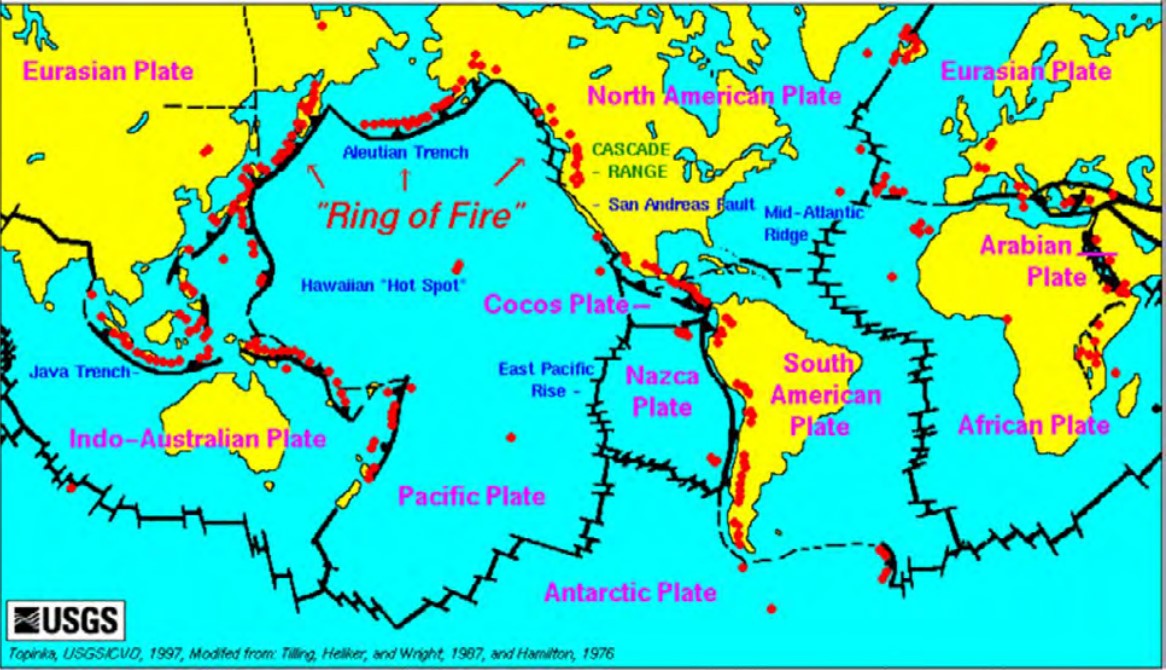
Geysers are rare formations and are only distributed across five countries on the earth’s surface, i.e. US, Russia, Chile, New Zealand and Iceland. On the other hand, hot springs are fairly common formations found mainly in the regions of active volcanoes.
Volcanic geysers are the results of geothermal heating of the groundwater due to interaction with the hot magma deep inside the earth’s surface or with the hot igneous rocks found at the shallow depths of the earth’s crust.
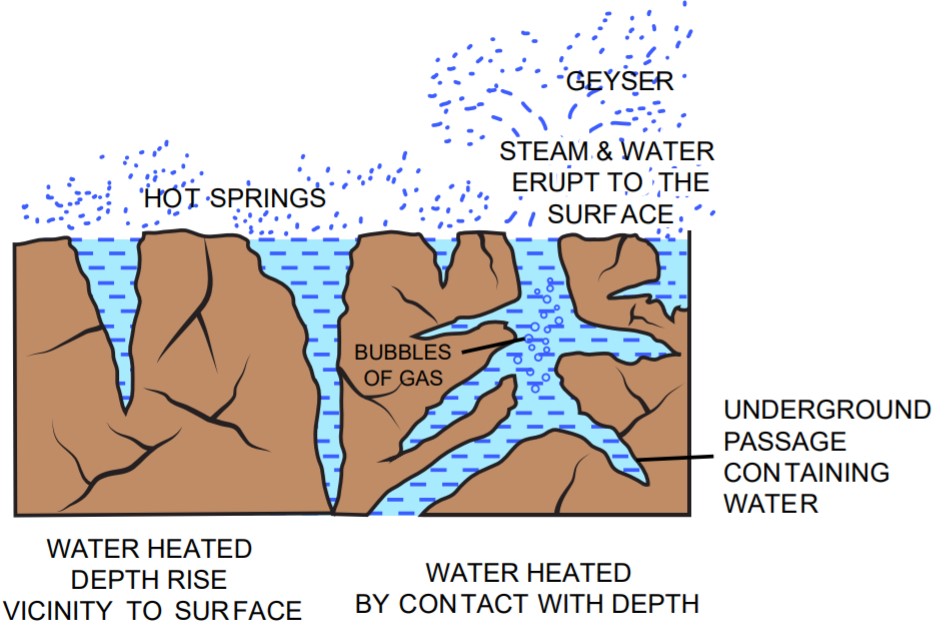
The water and steam sprouted from the geysers are owed to the pipe channels known as conduits found below the surface of the geysers that cause the irregular ejaculation of hot water accompanied by steam. This process occurs when the water reaches a boiling point in the conduits.
This reaction continues to the point till the water supply inside the conduits has reached its exhaustion point. After the process has momentarily halted, the conduits again get filled with water, and this chain reaction continues.
The conditions and process of formation of geysers are as follows:
Some of the geographic locations of popular geysers across the world are:
Check out the complete UPSC Syllabus
Natural geysers are formations that absorb heat from the earth. Hot meteoric water is spouted from its reservoir with a massive amount of force and is accompanied by a huge amount of steam. This process generates an intensive amount of heat.
The natural hot water geysers are mainly of two types:
One of the examples of the discharge of hot geothermal water from columns is, the Old Faithful geyser in Wyoming which extracts heat and energy from the surface of the earth and discharges it at irregular intervals.
An example of an explosive natural hot water geyser is the Narcissus geyser in Wyoming which ejaculates hot spring water at an explosive intensity.
Visit to know more about UPSC Exam Pattern
Hot springs are also more commonly known as hydrothermal springs and geothermal springs. These structures hold geothermally heated water present in craters on the earth’s surface. The water in the hot springs gets heated due to interacting with the hot mantle present below the earth’s crust.
The water in the hot springs is rich in minerals and iron with the presence of silica, carbon dioxide and carbonate minerals. People generally are attracted to the hot springs for relaxation and therapeutic purposes.
Some of the examples of important hot springs across the world are
Also read about How to Prepare for UPSC without Coaching
Geysers and hot springs are natural sources of hot water on the earth’s surface, which are fairly common in characteristics while also having some major differences. The formation of geysers requires the perfect terrestrial conditions, which is the way they are very rare natural formations.
Hot springs are a source of major tourist attraction mainly because they manifest therapeutic and recreational activities.
● Almost all the world’s geysers are constricted to three major areas: Iceland, Yellowstone Park of the U.S.A. and New Zealand
● Iceland has thousands of hot springs
● Geysers and Hot springs have become tourist attractions like in Japan and Hawaii
● Water which percolates into the porous rock is subjected to intense heat by the hard rock underneath which is in contact with hot magma
● Due to the influence of intense heat, the water in the capillaries and narrow roots in the porous rock undergoes extreme expansion and gets converted to steam causing high pressure
● As this steam or water at high pressure finds a way to the surface through narrow vents and weak zones, they appear at the surface as geysers and hot water springs
● Geyser
● Hot Water Spring



 Profile
 Settings
 Refer your friends
 Sign out