The series of events that results in the exchange of oxygen and carbon dioxide between the atmosphere and the body cells is known as respiration. External respiration is the term for this. The gases are transported to and from the tissue cells by the blood. Internal respiration is the exchange of gases between the blood and tissue cells.
To obtain energy from food, all living organisms need respiration. The entire process of breathing is a form of respiration.
The meal (glucose) is broken down to release energy. There are two forms of respiration based on the usage of Oxygen: Aerobic respiration and Anaerobic respiration.
In this process, glucose is broken down with the help of oxygen. Along with the release of energy, glucose breaks down into carbon dioxide and water
This is when glucose is broken down without the need for oxygen. Along with the release of energy, glucose breaks down into alcohol and carbon dioxide. Yeast, for example, can thrive in the absence of oxygen and obtain energy through anaerobic respiration. The energy demand is great during intense exercise, fast running, and other activities, but the supply of oxygen to produce the energy is restricted. To meet the energy demand, anaerobic respiration occurs in the muscle cells.
Lactic acid is produced when glucose is partially broken down. Muscle cramps are caused by an accumulation of lactic acid. Blood circulation is improved by taking a hot bath or getting a massage. As a result, the oxygen delivery to muscle cells improves. Lactic acid is completely broken down into carbon dioxide and water when the oxygen supply is increased.
Breathing is the process of inhaling oxygen-rich air and exhaling carbon dioxide-rich air with the help of respiratory organs
When a person needs additional energy, he or she breathes quicker. As a result, our cells receive more oxygen. It accelerates the breakdown of food, releasing more energy. At rest, an adult human breathes 15–18 times per minute on average. The breathing rate might increase to 25 times per minute during vigorous exercise.
Gas exchange, endogenous and foreign agent metabolism, and disease and chemical harm defence are all roles performed by the respiratory system. Its physical features and large number of specialised cells make it ideal for such tasks.
Therefore, it is one of the most important and complex task executed by our body.
Yeast, for example, can thrive in the absence of oxygen and obtain energy through anaerobic respiration.
The energy demand is great during intense exercise, fast running, and other activities, but the supply of oxygen to produce the energy is restricted. To meet the energy demand, anaerobic respiration occurs in the muscle cells:
Lactic acid is produced when glucose is partially broken down. Muscle cramps are caused by an accumulation of lactic acid. Blood circulation is improved by taking a hot bath or getting a massage. As a result, the oxygen delivery to muscle cells improves. Lactic acid is completely broken down into carbon dioxide and water when the oxygen supply is increased.
Breathing is the process of inhaling oxygen-rich air and exhaling carbon dioxide-rich air with the help of respiratory organs.
When a person needs additional energy, he or she breathes quicker. As a result, our cells receive more oxygen. It accelerates the breakdown of food, releasing more energy. At rest, an adult human breathes 15–18 times per minute on average. The breathing rate might increase to 25 times per minute during vigorous exercise.
Fig.: Inhaled and exhaled air composition
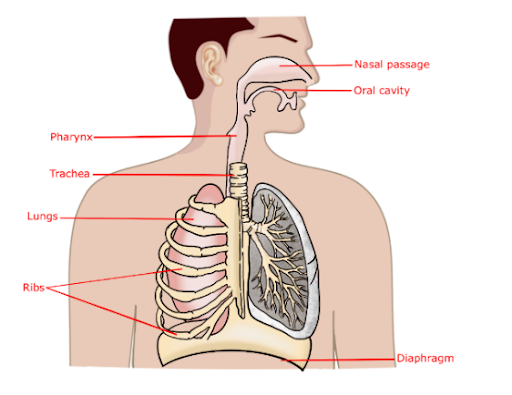
Fig.: Human respiratory system
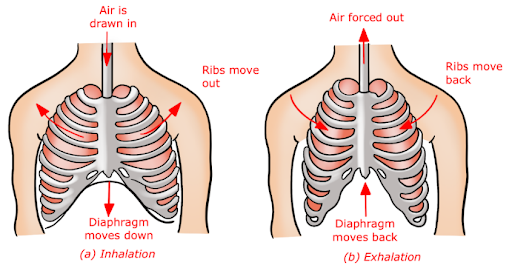
Fig.: Mechanism of breathing in Humans
• Practicing traditional breathing exercises (pranayama) regularly can help the lungs to intake more air. As a result, more oxygen can be delivered to the bodily cells, resulting in more energy being released.



 Profile
 Settings
 Refer your friends
 Sign out