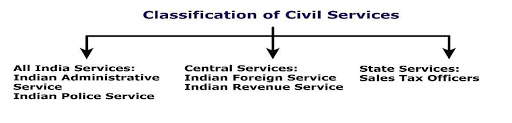
The administrative organ of governance includes the Prime Minister, the Council of Ministers, and a large committee called the Bureaucracy or the administrative machinery. To emphasize the difference between this machinery and military service, it’s described as civil service. Trained and accomplished officers who work as permanent employees of the government are assigned to assist the Ministers in formulating policies and enforcing these policies.
Check out the complete UPSC Syllabus
Also see: UPSC Preparation Books
Also read about How to Prepare for UPSC without Coaching
India’s post-independence bureaucracy may be fairly seen as a legacy of British authority in India. As a result, the system that was built was of high quality and was extremely beneficial to India after independence. The shift of bureaucrats from colonial administration to newly acquired democratic culture was flawless, which would not have been possible without the expertise of the civil body. Most Indian administrations managed ICS (Indian Civil Service) officers for more than two decades following independence.
The ICS officers gradually retired, and by the late 1970s, the vast majority had quit, leaving the whole Indian Administrative System in the hands of IAS personnel. This might be regarded as the start of a new age in Indian bureaucracy. The Indian bureaucracy of today is strong and capable of running the Indian Government through its ups and downs.



 Profile
 Settings
 Refer your friends
 Sign out