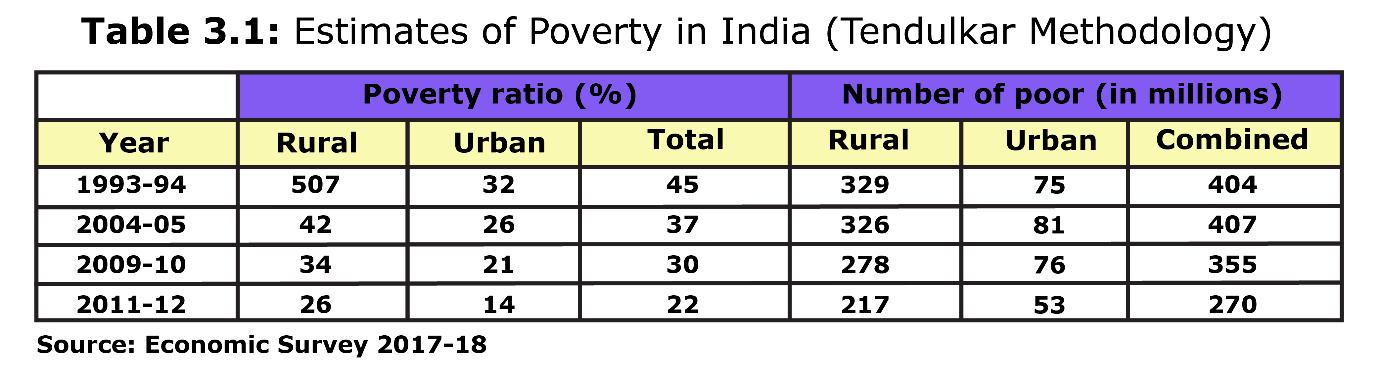
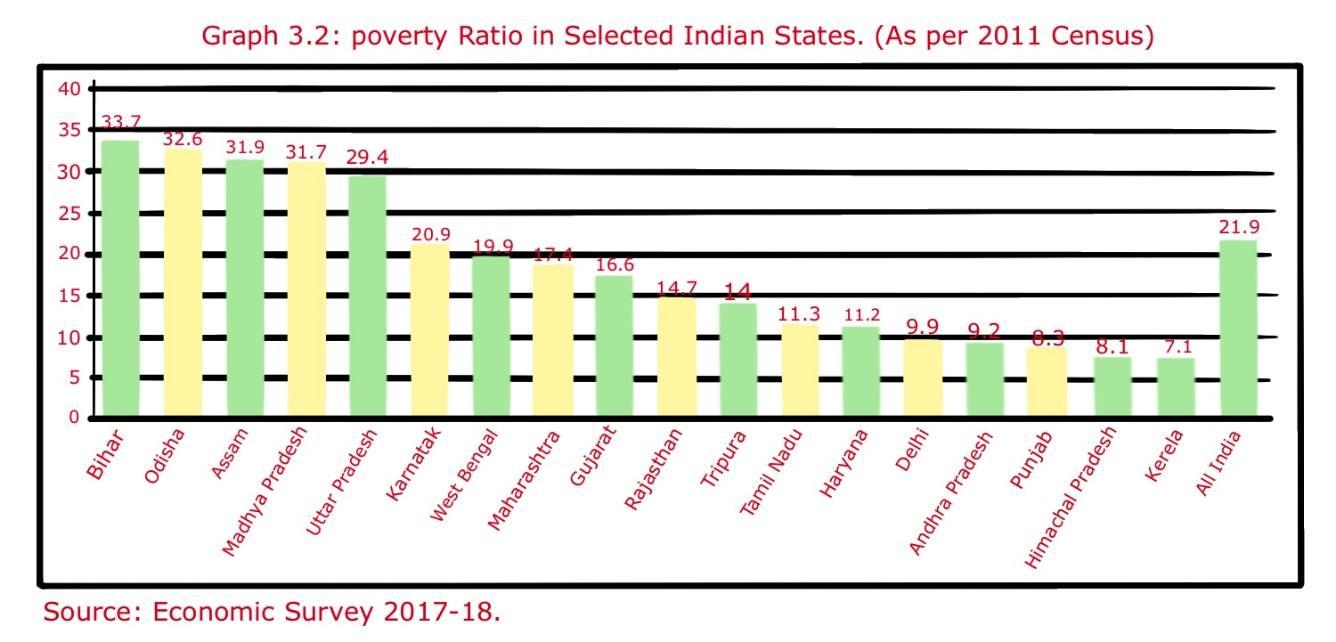
About 270 million (or 27 crores) individuals in India live in poverty (2011-12). This additionally implies that India has the most considerable single centralization of the poor on the planet. It shows the graveness of the challenge.
Apart from being poor, poverty also has various dimensions like hunger, lack of shelter, inability to access education, healthcare, clean water, and sanitation. Most importantly, it implies living with a feeling of powerlessness.
Social scientists’ view of poverty based on social exclusion and vulnerability is now becoming very common. Now poverty is looked at through other social indicators like
In different countries living in extreme economic poverty, the proportion of people in different countries has fallen from 36 percent in 1990 to 10 percent in 2015. This is an example of a global poverty scenario.
There is inequality of income within a family. As types of poverty are considered, in families living in poverty all the members are suffering, but some suffer more than others.
In various families, females are denied equal access to resources available to the family.
Poverty is the result of many factors such as unemployment, large population, illiteracy, poor health etc. and has many dimensions. Basically, poverty is measured by the Poverty line which can be different for each country. By using this concept we can analyze the poverty data at the national and international levels and take measures to eradicate poverty. New concepts such as size exclusion and vulnerability have been introduced by social scientists to analyze the poverty data. Many more factors and trends have been included in poverty data analysis by the scholars and widen the concept of poverty to suggest measures to the government.



 Profile
 Settings
 Refer your friends
 Sign out