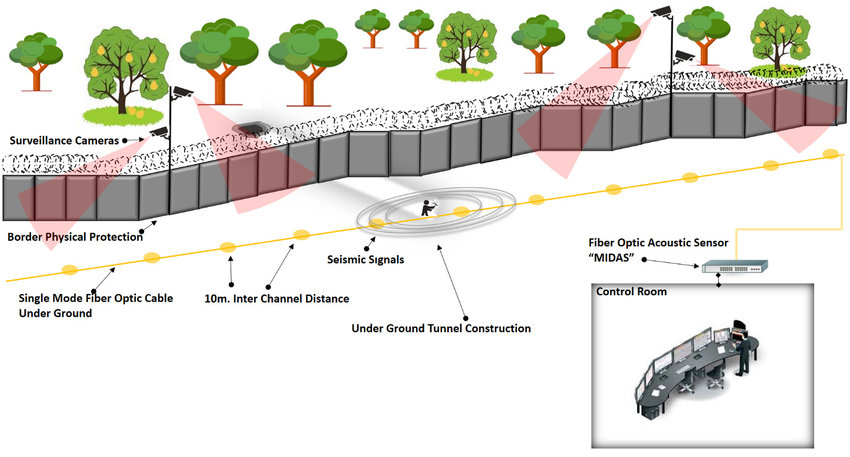
It refers to the use of electronic devices and technologies to monitor, detect, track, and record activities—especially for security and intelligence purposes.
Key Components of Electronic Surveillance:
CCTV Cameras – Used for real-time visual monitoring of sensitive areas.
Motion Detectors & Sensors – Detect unauthorized movement near borders or restricted zones.
Thermal & Infrared Cameras – Allow surveillance even at night or in foggy conditions.
Radar Systems – Track aerial, ground, and water movement.
Drone Surveillance – Monitors vast or inaccessible areas remotely.
Signal Interception Devices – Capture radio or wireless communication for intelligence.
Significance:
Early Detection of Infiltration: Helps detect intrusions in real time, minimizing reaction time for security forces.
Tunnel Detection: Vital in identifying underground tunnels terrorists use for sneak attacks and arms smuggling.
Reduces Manual Patrolling Risks: Minimizes exposure of personnel to harsh terrain and enemy fire.
Anti-Drone Capabilities: Counters unmanned aerial threats, especially from Pakistan’s side, often used for weapon drops or surveillance.
Force Multiplier: Enhances surveillance coverage without a proportional increase in manpower.
24×7 Monitoring: Enables round-the-clock surveillance in difficult terrains like dense forests, riverine belts, and mountains.
Cost-Effective & Scalable: Long-term cost saving with low-maintenance systems that can be deployed across long border stretches.
Why in News?
Union Home Minister Amit Shah said that two models of electronic surveillance systems, designed to detect infiltrators and underground tunnels, are currently undergoing trials along the Jammu border.



 Profile
 Settings
 Refer your friends
 Sign out