Oxygen is a chemical element — a substance that includes only one sort of atom. Its atomic number is 8, and its official chemical symbol is O. An oxygen atom has eight protons in its nucleus. At normal temperature, oxygen is a colourless, odourless, and tasteless gas. Oxygen exists as a molecule in nature. Dioxygen, or O2, is formed when two oxygen atoms establish a strong covalent double bond.
Oxygen can be created in a variety of methods in the laboratory
2H2O2 (aq) → 2H2O (l) + O2 (g)
2HgO (s) → 2Hg (l) + O2 (g)
2PbO2 (s) → 2PbO (s) + O2 (g)
2KClO3 → 2KCl + 3O2
Air is used to produce O2 on a huge scale. Carbon dioxide and water are removed from the air, and the remaining gases are extracted through fractional distillation and liquefaction, releasing nitrogen and oxygen.
The oxygen levels in the blood that passes through the arteries of the body are known as blood oxygen levels (arterial oxygen).
The oxygen and carbon dioxide levels in blood collected from an artery can be evaluated before they enter body tissues in an ABG test. An ABG machine (blood gas analyzer) will be used to determine your blood oxygen levels in the form of partial pressure of oxygen (PaO2).
An equipment called a pulse oximeter can also be used to test blood oxygen levels.
A pulse oximeter is a compact, portable medical equipment that can be used anywhere.
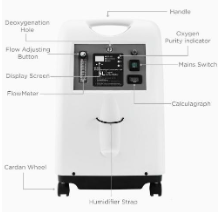
An oxygen concentrator is a device that selectively removes nitrogen from a gas supply (usually ambient air) to produce an oxygen-enriched product gas stream. They’re used in industry and as oxygen therapy equipment in hospitals.
Pressure swing adsorption and membrane gas separation are two commonly used approaches. Multiple molecular sieves made of zeolite minerals are used in pressure swing adsorption (PSA) concentrators to adsorb pressured nitrogen in quick cycles.
Pressure swing adsorption (PSA) oxygen concentrators are commonly employed in healthcare applications, particularly where liquid or pressurised oxygen is too harmful or cumbersome, such as in homes or portable clinics. Concentrators based on nitrogen separation membrane technology are also available for various applications.
People who require medical oxygen owing to low oxygen levels in their blood can use an oxygen concentrator, which takes in air and eliminates nitrogen, leaving an oxygen-enriched atmosphere. Oxygen concentrators, also known as oxygen gas generators or oxygen generating plants, provide a cost-effective source of oxygen in industrial processes.
Oxygen is utilised in the production of glass and stone products, as well as in mining. In cases of high pressure, special oxygen chambers are utilised to raise the partial pressure of oxygen surrounding the patient. Melting, refining, and manufacturing steel and other metals are among the most common uses of oxygen.



 Profile
 Settings
 Refer your friends
 Sign out