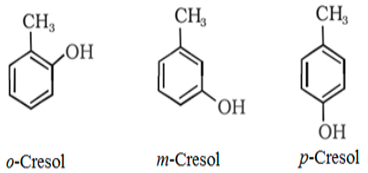
Phenols are the natural compounds containing a benzene ring bonded with a hydroxyl group. They are even called carbolic acids. Hence, a phenol molecule contains two parts: one aryl group part and the other is hydroxyl group part.
Phenol includes two elements: one aryl group and one hydroxyl group. So primarily based on the number of aryl groups connected, Phenols may be further sub-labeled as mono-, di-, tri-, or polyhydric Phenols. The IUPAC name for Phenol is Mono hydroxy benzene or can be called C6H5OH.
Earlier than progressing similarly to the nomenclature of Phenols, let us revise some essential regulations of IUPAC nomenclature that are well known.
According to the hints of IUPAC, the following rules are vital to comply with when practicing nomenclature-:
IUPAC has a fixed set of pointers in a location that needs to usually be observed even as naming Phenols. This is finished to ensure uniformity for all practical purposes.
Benzene is an organic chemical compound. It is classified as a benzenoid aromatic compound. All the compounds which have a benzene ring and are stable are called the benzenoid aromatic compound. On the other hand, compounds that do not have benzene ring but are stable are called non-benzenoid aromatic compounds.
Phenols are organic compounds that contain a benzene ring bonded to a hydroxyl group. They are also called carbolic acids. Phenols are weak acids and are not completely soluble in water. They also have many applications in households, medical and industrial fields. Above we have discussed the nomenclature of phenols and what are the rules of the IUPAC nomenclature. We have talked about 4 methyl- Phenol and benzene rings.



 Profile
 Settings
 Refer your friends
 Sign out