The circulatory system’s arteries and veins are two distinct classes of blood vessels that play diverse roles in transporting blood throughout the body. However, the functions of the two blood vessels are substantially distinct. For example, arteries convey oxygenated blood throughout the body, whereas veins transport deoxygenated blood to the heart except in cases where pulmonary arteries and veins are involved.
ARTERIES | VEINS |
Functions | |
Except for the pulmonary arteries, involved in transporting oxygenated blood. | Except for the pulmonary veins, all other veins are involved in transporting deoxygenated blood. |
Walls | |
Rigid, thick, and muscly: that’s how the walls are constructed. | Thinner and less muscular layers make up the first two layers of the wall. Position |
Position | |
It is buried deep inside the human body. | Nearer to the surface of the skin as viewed from the side. |
Appearance | |
The colour is red. | The colour is blue. |
Transports | |
Carry blood from the heart to other regions of the body. | Transportation of blood from various regions of the body to the heart is carried out by transports. |
Rate of pressure | |
The heart’s pumping pressure causes the blood to flow at a high rate. | Low blood pressure because of the veins’ capillary activity. |
Oxygen Level | |
Oxygen Levels are higher. | Low oxygen concentration. |
Carbon dioxide Level | |
The concentration of CO2 is low. | The level of carbon dioxide is high |
The direction of Blood Flow | |
From the heart to the body’s tissues, in a downward path. | The flow of blood in an upward direction. |
Lumen | |
It’s a tight squeeze in there. | The width of a lumin is referred to as its lumen. |
Valves | |
There are no valves. | Present of valves |
Disorders | |
Certain disorders, such as angina pectoris, atherosclerosis, and more, are more likely to occur in the arteries. | Varicose veins are less likely to develop in those with healthy veins. |
It is from the arteries, which branch out into smaller vessels as they leave the heart, that blood is transported out from the body. It’s at this point that all of the nutrients, gasses and other waste chemicals are exchanged in microscopic capillaries known as arterioles. You can find veins in every part of your body. Transparent tubes transporting deoxygenated blood from tissue to heart for reoxygenation are called capillaries. Veins have a thin wall compared to arteries.The heart is sometimes referred to as the human body.
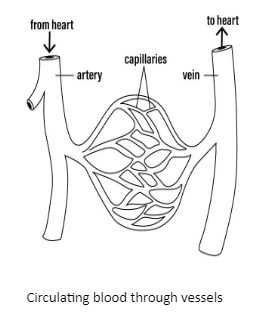
The arteries and veins are depicted in the diagram below.
Circulating blood through vessels
Listed here are the various types of arteries and veins in the human body.
Arterial Types
Aortas can be divided into three categories:
Vein Classifications
Vascular System: These vessels, which can be found in all parts of the body, convey oxygen-depleted blood to the heart for purification.
Veins, arteries are located deep within your muscles. Vein walls are less thick than artery walls. Your veins transport blood from your body’s many organs to your heart. Blood leaves your heart through arteries.



 Profile
 Settings
 Refer your friends
 Sign out