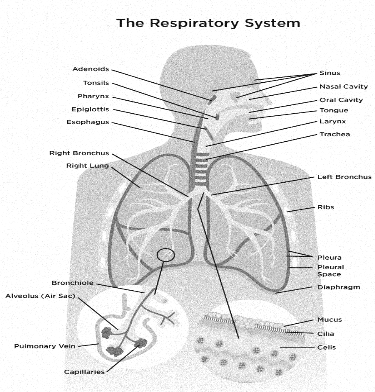
The respiratory system begins with the nose and mouth and progresses to the airways and lungs. Air enters the respiratory system via the nose and mouth, then travels down the throat (pharynx) and into the voice box, or larynx. A small flap of tissue (epiglottis) covers the entrance to the larynx and closes automatically during swallowing, preventing food or drink from entering the airways.
The lungs absorb oxygen. The cells in your body require oxygen to live and function normally. Carbon dioxide, a waste product of the cells, is also expelled by the lungs.
The lungs are a pair of cone-shaped organs made of pinkish-gray spongy tissue. They occupy the majority of the chest space (thorax).
A membrane surrounds the lungs (pleura).
Inhalation and exhalation are the processes by which your body takes in oxygen and expel carbon dioxide. The diaphragm, a large dome-shaped muscle beneath your lungs, aids in the process.When you breathe in, your diaphragm pulls downward, creating a vacuum and allowing air to rush into your lungs.When you exhale, your diaphragm relaxes upward, pushing on your lungs and allowing them to deflate.
Your respiratory system has mechanisms in place to prevent harmful substances in the air from entering your lungs.
Large particles are filtered out by the hairs in your nose. Tiny hairs called cilia move in a sweeping motion along your air passages to keep them clean. However, if you breathe in harmful substances, such as cigarette smoke, the cilia may stop working. This can result in health issues such as bronchitis.
Cells in your trachea and bronchial tubes produce mucus, which keeps air passages moist and keeps dust, bacteria, viruses, and allergy-causing substances out of your lungs.
Mucus can bring things up from deeper within your lungs.
The following are examples of common respiratory diseases:
The respiratory system begins with the nose and mouth and progresses to the airways and lungs. Air enters the respiratory system via the nose and mouth, then travels down the throat and into the voice box, or larynx. A spirometer is used to measure the volume and capacity of the lungs. The pharynx, also known as the throat, is a passageway that runs from the base of the skull to the sixth cervical vertebra. The larynx, also known as the voice box, is the airway that connects the pharynx above and the trachea below. The trachea, also known as the windpipe, is the primary airway to the lungs. Beyond the primary bronchi, the two lungs contain all of the bronchial tree’s components.



 Profile
 Settings
 Refer your friends
 Sign out