Reproduction is the biological process of creating a new human or offspring who is genetically identical to the parents. When conditions are favourable, this process assures that the number of individuals in a species increases. It is a vital life process and one of the fundamental properties of living beings.
There are two types of reproduction – asexual and sexual.
Sexual Reproduction – The development and transmission of gametes is followed by fertilisation, the formation of the zygote, and embryogenesis, which is a very complex process.
Asexual Reproduction – Only one parent is involved in this mode of reproduction, and the new offspring generated is genetically identical to the parent.
Sexual reproduction is a method of reproduction used by all humans. In this method, two parents work together to make a new human. Offspring are produced by the fusion of gametes (sex cells) from both parents. As a result, the freshly formed person will be genetically and physically separate from his or her parents. Human males and females have diverse reproductive systems, which is why sexual dimorphism is a term used to describe this. Females have ovaries and males have testes, which are also known as testicles.
Reproduction requires the union of male and female gametes produced in the human reproductive system. The male reproductive system is different from the female reproductive system both in anatomy and function.
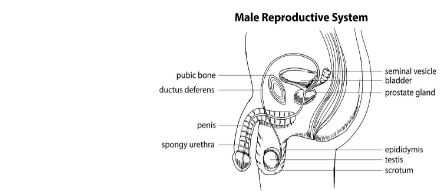
The male reproductive system is where sperms, or male gametes, are created. Sperms are single-celled entities with a head, midsection, and tail.
The male reproductive system is made up of the following parts:
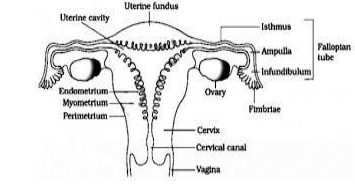
Before, during, and after fertilisation, the female reproductive system is active. It is made up of parts described below:
Vagina: This is the part of the female body that connects the cervix to the rest of the body. It is the path taken by both the penis and the foetus during coitus and delivery.
The female reproductive system serves two purposes:
The eggs in the ovaries begin to develop during adolescence. Ovulation is the release of a developed ovum by one of the ovaries every 28 to 30 days.
The reproductive system regulates the vaginal pH, which helps the female body maintain homeostasis. Hormones produced by the reproductive system are responsible for sexual development and puberty. The total temperature of the testis is managed by the male reproductive system to maintain homeostasis.
The process of sperm fusing with an egg (ovum) to produce a zygote is known as fertilisation. Fertilisation is a critical stage in human reproduction. The zygote is the name given to the fertilised egg. The zygote begins to split into many cells and becomes an embryo. The embryo enters the uterus and attaches to its walls. Implantation is the name given to this procedure, and the implanted embryo eventually develops into a foetus.



 Profile
 Settings
 Refer your friends
 Sign out