The term plasmid was coined by Joshua Lederberg. In microbiology, a plasmid is an extrachromosomal genetic element found in many bacterial species. Plasmids are circular DNA molecules that replicate independently of the chromosome of the bacteria. They aren’t required for the bacterium’s survival, but they may provide a selection advantage. Colicinogenic factors are a type of plasmid that controls the creation of proteins called colicins, which have antibiotic properties and can kill bacteria. R factors are a type of plasmid that provides antibiotic resistance to bacteria. Some Col factors and R factors can move from one cell to another, allowing them to spread quickly throughout a bacterial population. An episome is a plasmid that is linked to the cell membrane or integrated into the bacterial chromosome. Plasmids are incredibly useful tools in molecular biology and genetics, particularly in the field of genetic engineering. They are essential in gene cloning, recombinant protein manufacturing (for example, human insulin), and gene therapy research.
Plasmids are non-essential extrachromosomal elements. They are beneficial, but they are not found in every organism of the species. Plasmids are not part of the genome, and the same plasmid can exist in various species and be transmitted from one to the other. Plasmids have their own replication origin (ORI), and they reproduce with the cell, so that each daughter cell has a copy of the plasmid as well. Aside from the replication origin, it frequently contains genes for antibiotic resistance, toxin synthesis, and other valuable genes that may be essential for cell survival.
The following are the characteristics of a plasmid:
There are 5 kinds of plasmids namely:
In DNA recombinant technology, plasmids and bacteriophages are widely utilized as cloning vectors.
By recombining DNA segments as required and inserting them into the bacteria cell to get the desired protein, Herbert Boyer and Stanley Norman Cohen jointly discovered recombinant DNA technology.
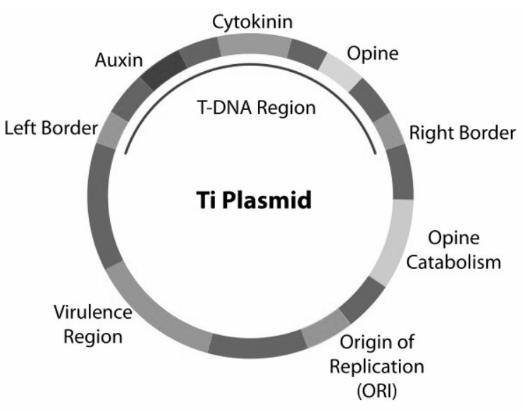
In the bacteria Agrobacterium tumefaciens, the Tumour inducing or Ti plasmid is found.
It’s now commonly employed as a cloning vector to transfer desired genes to the host plant, resulting in transgenic plants. The following are the major properties of Ti plasmid:
Plasmids come in a variety of sizes, ranging from a few thousand DNA base pairs to hundreds of thousands. When a bacterium divides, all of the plasmids in the cell are duplicated, giving each daughter cell a copy of each plasmid. Bacteria can also exchange plasmids through a process known as conjugation.Scientists have used plasmids as a tool for cloning, transferring, and modifying genes. Vectors are plasmids that are used in research for these purposes. By adding DNA fragments or genes into a plasmid vector, researchers can make a recombinant plasmid. This plasmid can be introduced into bacteria via the transformation process. Bacteria can therefore be employed as factories to copy DNA fragments in vast quantities since they divide quickly.



 Profile
 Settings
 Refer your friends
 Sign out