Cardiac output is the volume of blood pumped out by both heart ventricles per minute, between 70-72 per minute. Cardiac output or heart output is denoted by the letter Q or Qc. The volume of blood is also called stroke volume. The measure of cardiac output holds excellent clinical significance in medical science to diagnose cardiac abnormalities.
Here CSA is the valve orifice cross-sectional area, and r is the valve radius.
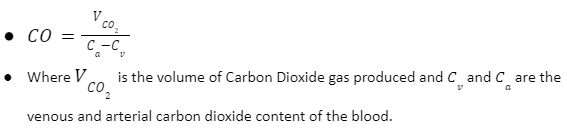
Development in science has made human lives better with increased quality. People who suffer mild cardiac arrest or heart disease are provided with pacemakers that increase their lifespan. Before any mishappenings, one can prevent it through different methods. ECGs, ultrasound, oximeters, and X-rays are some common ways to detect any abnormality in the heart. One focuses on its characteristics for any measuring device: it should be non-invasive, precise, accurate, easy to use, readily available, and affordable. Measuring cardiac output is an aid in the prognosis and diagnosis of any heart abnormalities. It is also used to monitor the accuracy of a therapy. There are different techniques to measure cardiac output, but each method has its strength and limitations. Electrocardiography and Doppler ultrasound are non-invasive techniques, whereas Fick’s cardiac output is invasive and not very accurate.



 Profile
 Settings
 Refer your friends
 Sign out