Anatomy is the study of living structures. Gross anatomy is the dissection and examination of major bodily structures. Microscopical anatomy is the study of structural components visible only using a light microscope. Anatomical dissection is required. To cut apart is the Greek ana temnein, which Theophrastus coined as “anatomy.”
It refers to a body part or cell’s involvement in the whole. Who or what caused a change in a natural selection system? A component’s function is defined as its contribution to the organism’s fitness.
Main categories:
The study of mature human morphology. There are two types of gross anatomy: gross and microscopic. Gross anatomy is the study of anatomical features that may be observed without magnification. It is the study of anatomical features that are visible without magnification. Microscopical anatomy examines minute anatomical structures with magnifying equipment. It comprises histology (tissue organisation) and cytology (cell organisation) (the study of cells).
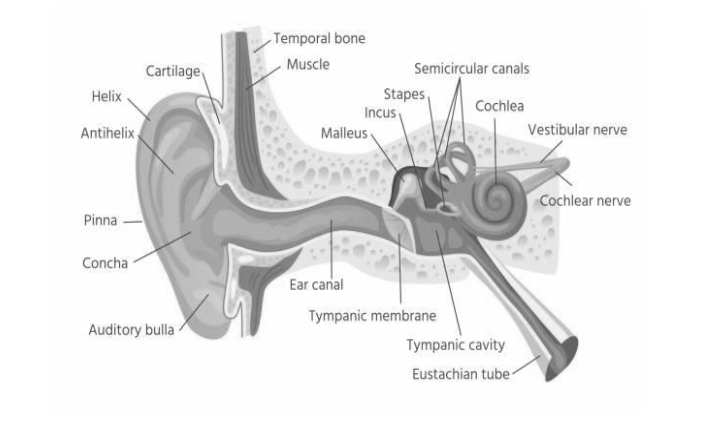
The ear is a sensory organ. The ear is made up of:
External ear, including:
Tympani (eardrum): The tympanic membrane denotes the distinction between the middle and outer ears.
Middle ear (tympanic cavity):
Inner ear:
The outer ear begins hearing. Sound waves travel through the external auditory canal and impact the eardrum when created outside the outer ear (tympanic membrane). It vibrates. The vibrations go to the ossicles, three small bones in the middle ear. It amplifies the sound. They convey sound waves to the inner ear and hearing organ (cochlea).
The inner ear amplifies sound waves. Auditory nerve impulses reach the brain. So the brain makes music out of electrical signals.
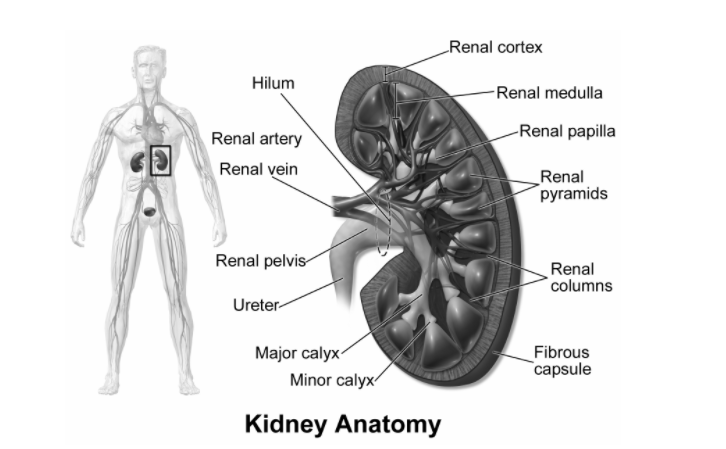
The kidneys are found on either side of the spine, behind the ribs. 4-5 inches long, about the size of a fist.It filters your blood. This helps to eliminate wastes and maintain electrolyte levels. Every day, your blood passes through them 40 times.
Hemoglobin is a protein that is found in blood. Filtered blood is reabsorbed. In the kidney, waste is turned into urine, which drains to the bladder through the ureter.There are millions of tiny filters in each kidney. You may only have 10% of your kidneys working and have no symptoms.A kidney may die if its blood supply is cut off. This can cause renal failure.
The kidneys’ main job is to excrete urine and cleanse the blood. Each kidney eliminates waste products and unwanted substances. The kidney’s major functions are listed below.
Waste removal
It’s easy to quantify creatinine and urea in the blood. Their “values” in blood tests show renal function. When both kidneys fail, creatinine and urea levels rise.
Excess fluid removal
When the kidneys fail, they can no longer remove extra water. Body water causes edoema.
Minerals and chemistries
BP control
RBC production
To keep strong bones
The ear is a hearing and balancing organ. It receives sound waves and converts them into sounds that we can understand. Your kidneys also filter out acid created by your cells and keep your blood balanced with water, salts, and minerals including sodium, calcium, phosphorus, and potassium.



 Profile
 Settings
 Refer your friends
 Sign out