In the case of inelastic collision, it is observed that there will be a significant change of the amount of kinetic energy into other forms of energy. The energy that was inside the bodies before the collision and after the collision will not remain the same and the form of energy (kinetic) due to the stickiness of the collision that bonds the two bodies together for a longer period and thus, it also undergoes change into some other form of energy at any stage in this type of collision. In this way, the initial energy amount and its form will completely change in this collision.
It is important to note the fact that, in reality, this collision, unlike the elastic collision, is physically possible. Not only that, it is quite common as well. In the case of elastic collision, we can observe that the collision takes place without any change in the form of energy or loss of energy which is impossible and there will always be some amount of change of form of energy or loss of energy during or after the collision. But, in the inelastic collision, the individual momentum will remain the same though. The same will go for the individual momenta of the particles involved in the process i.e., it will not change.
It is the exact opposite of elastic collision as far as what happens to the form of energy is concerned. In a collision that is said to be inelastic, energy is transformed into some other form of energy but the momentum remains the same. The energy level is also significantly lost and most collisions between bodies are of this type in nature.
Collision is also known as impact in Physics. Collision refers to the sudden and forceful direct contact between two bodies which can be or may not be of the same properties and composition material. During this sudden contact period, there will be an instantaneous change in the body’s velocity. However, there will be no alteration in the position of the body during the point of that contact. The momenta and momentum of the bodies will change depending on the collision and the material of the bodies.
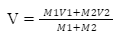
The formula for Inelastic Collision:
Here,
Some examples of Inelastic Collision:
In an inelastic collision, energy is transformed into some other form of energy but the momentum remains the same. There is no change in the position of the body during the point of that contact. The momenta and momentum of the bodies will not change but their pace will (depending on the collision and the material of the bodies). The major takeaway from this type of collision is that energy form changes after the collision, the energy level is also significantly lost and most collisions between bodies are of this type in nature. How the bodies bond with each other is completely different in an inelastic collision compared to elastic collision. There is a lot of visible stickiness in the inelastic collision which slows down the entire process and this results in the conversion of the kinetic energy of the bodies. While some bodies may make sound, others may produce heat energy.


 Profile
 Settings
 Refer your friends
 Sign out