In Euclidean space, whenever 3 non-collinear vertices develop a separate triangle and, at the same time, a unique surface. In other terms, the triangular is included in just one plane, as well as every triangular is included in a certain plane. There can only be one surface and all triangles are enclosed in it when the whole geometry is indeed the Euclidean surface; nevertheless, it’s no longer correct in greater Euclidean environments.
TYPES OF TRIANGLES
Triangle classification terminology dates back over 2000 years, having been defined in the first paragraph in Euclid’s Principles. Modern categorization labels are either straight transliterations of Euclid’s Greek but rather Latin adaptations of those designations.
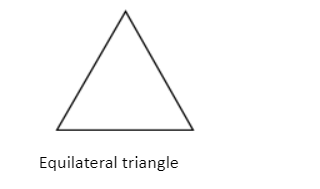
Equilateral Triangle– Three sides like an equilateral triangle seem to be the same lengths. A normal polygon within all edges equal to 60 degrees is an equilateral triangle.
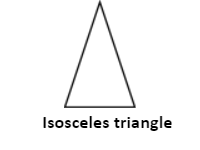
Isosceles Triangle– Two sides about an isosceles are of similar duration. In addition, an isosceles triangle contains two positions of equal length, namely angles opposing the 2 aspects of equal length. This isosceles triangles hypothesis, that Euclid was aware of, is based on this fact. An isosceles triangle is defined by some statisticians as having exactly two equivalent sides, while others describe it as getting at least two equivalent sides. According to the former definition, all equilateral triangles are isosceles triangles. Isosceles is indeed the 45–45–90 right angle that occurs within tetrakis squares tile.
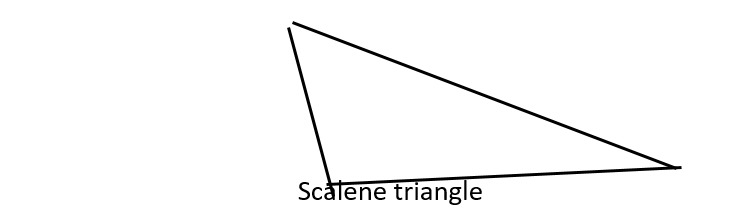
Scalene Triangle- All of the sides of a scalene triangle are different lengths. Have all angles with different measures in the same way.
Other Types of internal angles
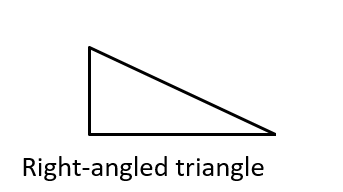
A Right Triangle- One of the internal angles of a right-angled (or right-angled triangle) is 90 degrees (a right angle). The hypotenuse, or largest side of both the triangular, is indeed the side opposite the perfect angle. The triangle’s leg, or catheti, are other two sides. The Pythagorean theorem means that the total of the square of said length of both the two legs equals the square of a hypotenuse length: a²+ b² = c², in which a and b are indeed the legs length as c is the hypotenuse duration. Special right angles have special qualities that make computations using them simpler.
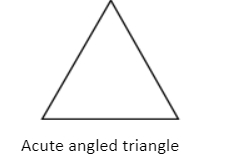
Acute Angle– An acute triangle, also known as just an acute-angled triangle, is indeed a triangle having all internal angles smaller than 90 degrees. If c seems to be the longest side’s length, therefore a2 + b2 > c2, wherein a and b would be other sides’ length.
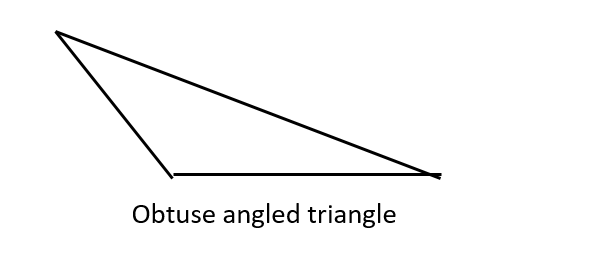
3.Obtuse Triangle– An obtuse triangle, also known as just an obtuse-angled triangle, is indeed a triangle having one internal angle greater than 90 degrees. If c is the biggest side’s length, thus a2 + b2 > c2, in which a & b would be other sides’ length.
ASSOCIATION WITH A TRIANGLE
There are hundreds of amounts of additional that discover a distinct point connected with (and frequently inside) a triangle that satisfies some unique property: for a list, check the page Encyclopaedia of Triangle Centres. They are frequently constructed besides finding three which are symmetrically associated with 3 sides (or edges) and afterwards proving that the three meets in a specific point: Ceva’s principle, which provides a set of criteria for deciding while three of that kind lines are coincident, is a useful tool for attempting to prove their existence
Area of a triangle
The area of a triangle refers to the area enclosed by the triangle in a 2-D plane. Rather it is defined as the total area enclosed by the three sides of the triangle. There are many formulas to calculate the area of a triangle. However, the most common formula to calculate the area of a triangle is
A = ½ * b * h where b is given as the base of the triangle, h refers to the height of the triangle and A refers to the area of the triangle. Another formula through which the area of a triangle can be calculated is Heron’s formula.
CONCLUSION
Unless the context indicates differently, triangles are presumed to be this double flat shapes. As a result, a triangle is referred to as a 2-simplex in severe treatments. In books 1–4 in his principles, published approximately 300 BC, Euclid revealed basic truths concerning triangles.
The inner angles of a triangle’s internal angles always sum up to 180 degrees.
In Euclidean space, the total of the internal sides of a triangle has always been 180 degrees. Euclid’s parallel premise is comparable to this truth.



 Profile
 Settings
 Refer your friends
 Sign out