Phosphorus pentachloride (208 g) and dried benzene (250 ml) were placed in a three-necked flask equipped with a mechanical stirrer, condenser and gas injection tube. Butadiene (85-90 g) was bubbled into a stirred and ice-cooled mixture. After passing through butadiene, a pale-yellow crystal mass was formed and the reaction mixture was stored overnight. The next day, it was treated with sulfur dioxide gas until the crystalline mass was dissolved. Phosphorus pentachloride is a pale-yellow phosphorus halide. It is involved in the synthesis of thiazolin analogs.
Hydrocarbons have traditionally been chlorinated with phosphorus pentachloride (PCl5). Also used in silicon surface chemistry, it promotes alkylation through a two-step halogenation / Grignard pathway. Here, we report a study on the reaction between PCl5 and hydride-terminated silicon nanocrystals (HSiNC). Studies of the reaction mechanism have allowed us to use PCl5 as a surface radical initiator to create a functionalization protocol that introduces alkyl and alkenyl moieties on the surface of HSiNC. The reaction proceeds rapidly in one step at room temperature, and the functionalized silicon nanocrystals retain their morphology and crystallinity. The resulting material exhibited size-dependent photoluminescence that was approximately 3 times brighter than that observed with thermally hydrosilylation SiNC. In addition, the absolute PL quantum yield (AQY) has more than doubled. The high AQY is expected to allow SiNC to compete with chalcogenide-based QDs in a variety of applications.
The structure of phosphorus chloride is all consistent with VSEPR theory. The structure of PCl5 depends on the environment. PCl5 melted in gas is a neutral molecule with a trigonal bipyramidal shape and (D3h) symmetry. This kind of hypervalent property can be explained by including nonbonding orbitals (molecular orbital theory) or resonances (valence bond theory). This trigonal bipyramidal structure persists in non-polar solvents such as CS2 and CCl4 . In the solid state, PCl5 is an ionic compound formulated as PCl 4+
PCl6 –
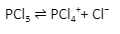
In polar solvents, PCl5 undergoes self-ionization. The dilute solution dissociates according to the following equilibrium.
Phosphorus pentachloride can be used to synthesise the following compounds:
Phosphorus pentachloride can be used as a halogenating agent to convert substituted aldehydes to the corresponding vinyl halides. It can also be reacted with ammonium chloride to produce linear phosphazene and cyclophosphazene.
Phosphorus pentachloride is a reactive compound. Direct contact with phosphorus pentachloride can cause weakness, nausea, headache, dizziness and vomiting. It can damage the liver and kidneys.
As a precaution, you must be able to identify phosphorus pentachloride. It is a crystalline solid, white to pale yellow in colour, with a pungent odour. Phosphorus pentachloride is a manufacturing compound for other chemicals, aluminium metallurgy, and the pharmaceutical industry.
Here are some of the acute health hazards that can be caused by phosphorus pentachloride.
Phosphorus pentachloride is a pale greenish-yellow solid of formula PCl5. Phosphorus pentachloride has a salt-like structure in the crystalline state and is known to partially dissociate in solution, especially in polar solvents such as nitrobenzene. It can be prepared by reacting phosphorus trichloride with dry chlorine. According to the law of mass action, phosphorus pentachloride evaporates in the atmosphere of chlorine gas or phosphorus trichloride with little dissociation, and the dissociation equilibrium shifts to the left due to the presence of the product.


 Profile
 Settings
 Refer your friends
 Sign out