Thermal power plants are an important part of the Indian energy sector. India has a total installed capacity of Thermal Power Plants (TPPs) on January 31, 2021, all across India is 393,389.46 MW. Out of this, coalbased thermal power plants account for 206404.50 MW and gasbased thermal power plants account for about 24956.51 MW. In this article, we will take a closer look at Thermal Power Plants in India, how many thermal power plants are in India and answer some common questions about them.
Thermal power plants or thermal power stations are power stations that generate electricity from heat. Thermal power plants use different sources of energy to produce heat, including coal, oil, natural gas, and geothermal sources. Thermal power plants are divided into two categories: those that use fossil fuels and those that use renewable energy sources.
There are several types of thermal power plants in India:
Thermal power plants are an important part of the electric power industry in India
As of now, there are 106 thermal power plants in India with a total installed capacity of 221,802.59 MW.
Of these 106 plants, 53 are coalfired, 24 are gasfired, 11 are oilfired, nine are mixed fuelfired and the remaining two use renewable sources – solar and biomass.
The top five states with the highest installed capacity of thermal power are – Maharashtra (27,345.50 MW), Tamil Nadu (26,246.50 MW), Uttar Pradesh (24,986.25 MW), Andhra Pradesh (21,825.00 MW) and Karnataka (18,560.00 MW).
List of Thermal Power Plants in India:
Maharashtra:
Here is the list of Thermal Power Plants In Maharashtra:
Tamil Nadu:
Here is the list of Thermal Power Plants In Tamil Nadu:
Uttar Pradesh:
Here is the list of Thermal Power Plants In Uttar Pradesh:
Andhra Pradesh:
Here is the list of Thermal Power Plants In Andhra Pradesh:
Karnataka:
Here is the list of Thermal Power Plants In Karnataka:
Odisha:
Chhattisgarh:
Madhya Pradesh:
Punjab:
Rajasthan:
Thermal power plants are an important part of the Indian economy. They provide a steady stream of electricity that is necessary for powering homes, businesses, and industries. In this article, we’ve answered some of the most common questions about thermal power plants in India.
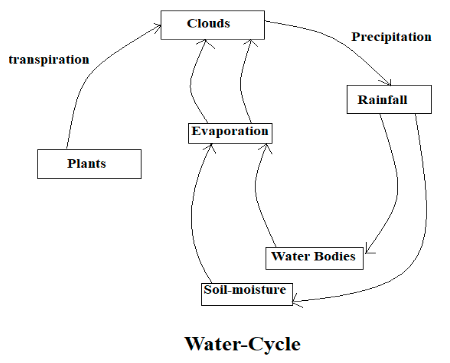
Due to the heat of the sun water evaporates from lakes, seas, rivers, and other water bodies; this process is known as evaporation, water also evaporates from the plant’s leaves, which is known as transpiration. As the water rises from lakes, seas, rivers, and other water bodies in the atmosphere, it gets cool and condenses to form clouds as a continuous process of evaporation and condensation, gradually the clouds get heavy, and as a result, precipitation occurs in the form of rain. And this rainwater is stored in any of the following reservoirs such as the ocean, soils, glaciers, under the Earth’s surface as groundwater, lakes, snowfields, etc.
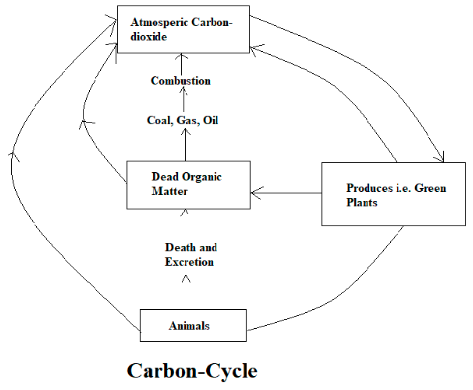
The carbon concentration in the atmosphere is about 0.03%. Circulation of carbon from the atmosphere to the biosphere, hydrosphere, lithosphere, and returns to the atmosphere is known as the carbon cycle. The carbon from the atmosphere enters into the plants through photosynthesis for synthesizing food particles, when the plants are consumed by terrestrial organisms, carbon dioxide enters them. When these terrestrial organisms die the carbon dioxide enters the soil. Carbon dioxide enters into the water as carbonates, which helps the aquatic plants to perform photosynthesis. CO2 returns to the atmosphere from fossil fuel, from respiration of animals, the release of smoke from vehicles, from the burning of wood. If CO2 increases in the atmosphere it disturbs the natural carbon cycle.
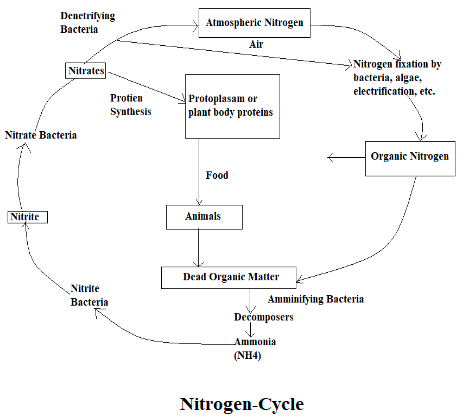
The atmosphere is made up of 78% Nitrogen; we need nitrogen for DNA and proteins. Nitrogen that is available in the atmosphere cannot be directly consumed by plants, they can consume the nitrogen when it is fixed i.e. when combined with other elements like carbon, hydrogen, and oxygen. By the action of denitrifying bacteria, nitrogen is spontaneously entering into the air and through the action of electrification and lightning, nitrogen is entering into the soil.
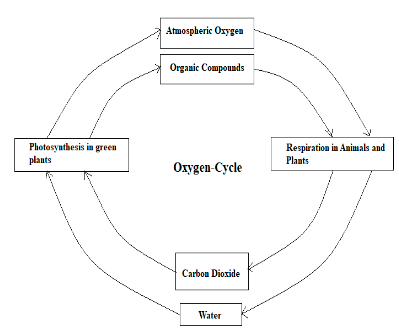
It is to conclude that the biochemical cycle in an ecosystem is defined as the transformation and transport of chemicals in ecosystems. In wetlands, by unique hydrological conditions, biogeochemical cycles are strongly influenced. There are four main important biogeochemical cycles in the ecosystem are oxygen cycle, water cycle or hydrologic, carbon cycle, and nitrogen cycle


 Profile
 Settings
 Refer your friends
 Sign out