Light travelling through air encounters various phenomena, including interference, refraction, reflection, and diffraction. Diffraction occurs when light encounters an obstacle.
The wavefront on the other side of a small opening is comparable in size to the wavelength λ of the light passing through it.
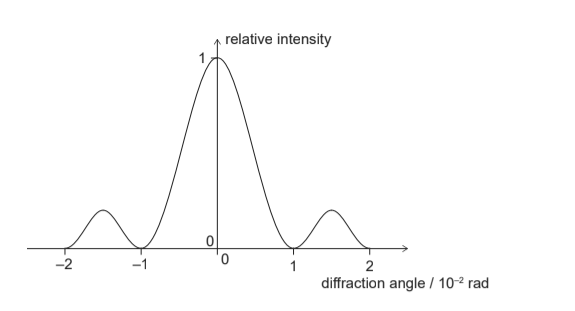
Observations of single slit diffraction can be made when light passes through a slit whose width (w) is on the order of the wavelength of the light. A distance L is greater than w from the slit determines the distance of the diffraction pattern on the screen. Diffraction intensity depends on the angle of incidence.
A field of study known as Diffraction has contributed to the development of precision spectrometers, which have significantly advanced Astronomy. At the beginning of the 1800s, two prestigious scientists fought for their lives in Italy and Germany, respectively. Diffraction is defined as the bending of light around a sharp corner of an obstacle. When light is reflected from a slit whose size corresponds to the wavelength of light, a pattern of dark and bright spots can be seen. This is known as single-slit diffraction.



 Profile
 Settings
 Refer your friends
 Sign out