3D geometry is the study of shapes in three-dimensional space using three coordinates: x-coordinate, y-coordinate, and z-coordinate. To discover the exact location of a point in three dimensions, three criteria are necessary. A coordinate system is the technique of determining the position or location of a point on the coordinate plane in three dimensions.
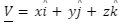
A point P (x, y, z) is represented as a vector in 3D space as
Using the Pythagorean theorem The distance between P (x,y,z) and the origin O (0,0,0) is
d = √(x2+y2+z2)
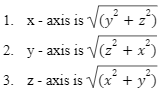
The distance from the point P (x, y, z) to
Using the Pythagorean theorem The distance between P (x1,y1,z1) and the Q (x2,y2,z2) is
d = √((x2-x1)2+(y2-y1)2+(z2-z1)2)
Let R be a point which divides the line segment PQ between two points P (x1,y1,z1) and Q (x2,y2,z2) internally with ratio m:n then the coordinates of R are:
((mx2+nx1)/(m+n), (my2+ny1)/(m+n), (mz2+nz1)/(m+n))
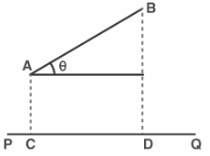
Assume that AB is a line segment. Then its projection on line PQ is ABCosθ
For a triangle formed with points P (x1,y1,z1), Q (x2,y2,z2) and R (x3,y3,z3), and lengths of sides as a, b and c its centroid is
((x1+y1+z1)/3 , (x2+y2+z2)/3 , (x3+y3+z3)/3)
And its incenter is
((x1+y1+z1)/(a+b+c) , (x2+y2+z2)/(a+b+c) , (x3+y3+z3)/(a+b+c))
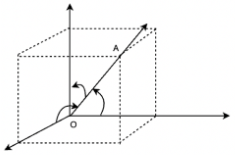
Assume a line OA passes through the origin and forms direction angles α, β, and γ with the x, y, and z-axes, respectively. The directional cosines of the directed line OA are the cosines of these angles cos(α), cos(β), and cos(γ). The line OA traveling through the origin and all of the angles it makes with the coordinate axes are depicted in the diagram below.
Note: The line can extend in both directions, and it can produce two different angles with the coordinate axes. The line makes α, β, and γ and their supplements π-α, π-β, and π-γ with the coordinate axes. The directional cosines’ indications will now be flipped. We chose to make it a directed line in order to have unique directional cosines.
Let’s say the lines’ directional cosines are l, m, and n.
Direction ratios of the line are numbers that are proportional to the line’s direction cosines. The directional cosines of the lines are assumed to be l, m, and n. Let’s say the line’s directional ratios are a, b, and c. Then,
l = k × a, m = k × b and n = k × c
Where k is any constant.
Three-dimensional space is a geometric setting in which the position of an element is determined by three values. This is how the term dimension is commonly used. A tuple of n numbers can be thought of as the Cartesian coordinates of a point in n-dimensional Euclidean space in mathematics.



 Profile
 Settings
 Refer your friends
 Sign out