In the field of chemistry, the pH of any substance plays an important role. One must identify and know the nature of the substance, solution, or liquid, including knowledge of the acidic, basic, or neutral nature of any chemical substance or solution. This knowledge plays a vital role in our day-to-day life.
If the acidic content in the food one ingests is above the normal limit, it can harm the human body, including causing a fatality. This module will discuss all the basics an individual needs to be aware of, including the concept, the significance, the uses, and the limitations of the Henderson-Hasselbalch equation.
Lawrence Joseph Henderson developed an equation for calculating the pH of a buffer solution in 1908. In 1917, Karl Albert Hasselbalch reformulated this equation in logarithmic terms, which is now frequently used in chemistry.
To determine the pH of a buffered solution, an individual must utilise the Henderson-Hasselbalch equation. This equation is derived from the kinetics of reversible reactions, which describe the characteristics of weak acids and bases in a given solution.
The Henderson-Hasselbalch equation gives the reader an interaction between the acid dissociation constant (pKa) and the pH of acids (in aqueous solutions). In simple words, the Henderson equation is a chemical equation that relates the acid dissociation constant to the pH of the aqueous solution of an acid.
This equation is often used in chemistry to calculate and find out the isoelectric point of various proteins. The isoelectric point of a protein is the pH at which its net charge becomes zero. In other words, the protein does not accept or donate protons.
The acid dissociation constant ‘Ka’ quantitatively measures the strength of an acidic solution. Ka represents the equilibrium constant for any given dissociation reaction of an acid in an aqueous solution.
HA (aqueous) ⇌ H+(aqueous) + A−(aqueous)
In the above reaction:
HA = the Generic Acid
A- = the Conjugate base of a given acid
H+ = is the Hydrogen proton or ion
These quantities in the equation remain in equilibrium even if their concentrations do not show any change with time.
The value of Ka, like other equilibrium constants, is determined with the help of the concentrations measured in terms of moles per litres of each aqueous component at the state of equilibrium. The following is the expression for the acid dissociation constant (Ka):
Ka=[H+][A-]/[HA]
There are various ways of writing the Henderson equation. Two of the most frequently used formulae/equations are:
pH = pKa + log [conjugate acid]/[weak acid]
pOH = pKb + log [conjugate acid]/[weak base]
The main objectives of the Henderson-Hasselbalch equation in the field of chemistry includes:
This article tells an individual about the concept, uses, significance, and limitations of the Henderson-Hasselbalch equation. The Henderson-Hasselbalch equation helps an individual interested in the discipline of chemistry gain an understanding of how to measure a buffer solution and examine it. Being well-versed with the concept of the Henderson-Hasselbalch equation will be useful for future chemists and chemical engineers.
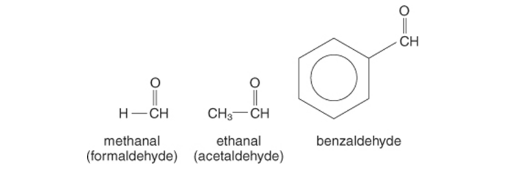
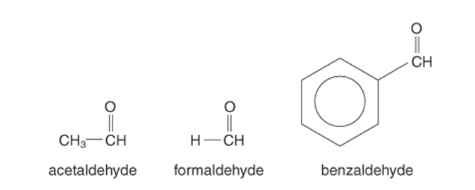
The standard method or perhaps the IUPAC system is used to name aldehydes. The familiar words of aldehydes have been obtained from the carboxylic acid’s common ones. Consider the following scenario:
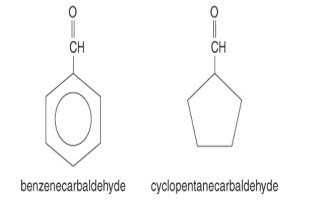
The term carbaldehyde is added to the designation of the ring structure in the IUPAC system to identify cyclic, aliphatic, & aromatic aldehydes.
Rather than benzenecarbaldehyde, the majority of chemists call it benzaldehyde. This alternative term is also used in many sources, such as articles.
RCHO is the chemical formula for such an aldehyde. R stands for a hydrogen ion or a carbon/hydrogen string, CO again for carbonyl and H for the hydrogen connected to the carbonyl sequence in this formula. It’s crucial to state the equation in this order because it builds the link between the aldehydic hydrogen and the carbonyl.
Aldehydes belong to organic chemical compounds whose general balanced equation is R-CHO. R can be hydrogen or a substituted or unsubstituted hydrocarbon revolutionary.
Several aldehydes seem to be unpredictable, flammable liquids producing vapour in explosive quantities at room temperature. Lesser aldehyde components, as well as those with an unsaturated and replaced chain, need the most stringent fire and explosion prevention measures, as well as the most extensive irritating property precautions.
Formalin is a chemical that is used to preserve biological and anatomical specimens. This is a popular method of specimen storage at major research institutes. It is used to clean medical instruments.
Have you ever wondered why germicides, insecticides, & fungicides, among other polymeric goods, are being used to keep bacteria, bugs, and fungus at bay? This is due to the formaldehyde element employed in manufacturing these items.
Due to its powerful ingredients, it reacts to cleanse water. Tissues are also hardened by formalin.
Acrolein is a necessary component in the paper industry since it regulates its slime.
This compound kills bacteria found in oil wells & chilled water tanks.
Acetaldehyde is a flavouring ingredient and a preservative for fruits and seafood.
Solvents containing benzene are appropriate to be used in the rubber production process.
Because benzene is included in base & overcoat paints, it is commonly employed in the printing industry to repair and sanitise printing equipment.
Benzyne is a chemical used to create plastics and synthetic materials such as nylon. Benzene is used in several ways in the plastics industry, such as cleansers.
Aldehyde is a chemical that is used to make petroleum products like gasoline. It is used to produce asphalt, which roofing firms utilise.
Aldehydes seem to be organic molecules with a carbon atom at the end. Because CHO is one of their main components, these are classified as compounds that contain CHO. Dehydrogenation of alcohol removes the hydrogen ion from the oxygen molecule, resulting in aldehydes. The carbon subsequently forms a double bond as a result of the reaction. Aldehydes are commonly utilised in industry to manufacture other chemicals. Aldehydes are used in various methods, many prevalent in a wide range of industries. Aldehydes are classified into four categories. Acrolein, Acetaldehyde, and Benzaldehyde are all forms of formaldehyde, which are carbon molecules, oxygen, and carbon.



 Profile
 Settings
 Refer your friends
 Sign out