Chemical bonding is the attraction between atoms that results in a chemical bond. The bond between two atoms is what causes a molecule to be a substance, and without a chemical bond, a molecule would not be a substance.
A chemical bond is a strong interaction that exists between two or more atoms. The bond holds the atoms together and gives them a strong enough attraction to each other to allow them to be separated. This separation is known as diffusion, and the atoms can then be moved around, or changed into different chemical compounds.
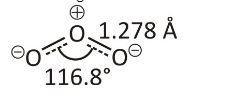
A single Lewis formula cannot describe delocalised electrons within molecules. Polyatomic ions that a single Lewis formula cannot clarify are called resonance. Several resonance structures depict a molecule or ion with such delocalised electrons. When resonance structures differ, it’s crucial to determine which one(s) best describes the actual bonding. The formal charge can predict which resonance structures are most likely to be preferred. The situation is with ozone (O₃), an oxygen allotrope with a V-shaped design and a 117.5° O–O–O angle.
Nuclear magnetic resonance is based on many nuclei having spun, and all nuclei are electrically charged. When an external magnetic field is applied, energy can be transferred to a higher energy level from the base energy.
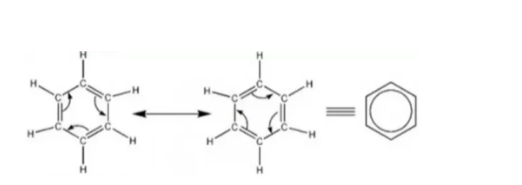
The Lewis structure sets that describe the electron’s delocalisation in a molecule or a polyatomic ion are known as resonance structures.
Chemical bonding can be described using resonance structures in such circumstances.
While every resonance structure adds to the molecule’s entire electronic structure, their contributions may not be equal. One way of determining the viability of a resonance structure and its relative significance among other structures is to assign formal charges to atoms in molecules.
Use the following formula to find the standard charge on a particular atom in a covalent species:
Formal Charge = (number of valence electrons in the free orbital)−(number of lone-pair electrons) − ½ (number bond pair electrons)
How does the nature of a bond affect the stability of a molecule?
The answer is resonance.
Resonance involves the breakage of old bonds and the formation of new bonds between atoms. The structures formed due to resonance always exist simultaneously in every specimen of the compound and contribute to the properties exhibited.
The nature of the bond helps us understand resonance. This is because the ionic bonds and covalent bonds break up differently. A covalent bond breaks up by giving each atom an electron. An ionic bond breaks by forming a cation and an anion.
A covalent bond is also much more stable than an ionic bond, and hence, more difficult to break. Thus, understanding the nature of the bonds in a compound helps us understand the stability it may have.
A single Lewis formula cannot describe delocalised electrons within molecules. Polyatomic ions that a single Lewis formula cannot clarify are called resonance. Several resonance structures depict a molecule or ion with such delocalised electrons. When resonance structures differ, it’s crucial to determine which one(s) best describes the actual bonding. The formal charge can predict which resonance structures are most likely to be preferred. We have studied the resonance structure of several molecules and polyatomic ions in detail.



 Profile
 Settings
 Refer your friends
 Sign out