Interrogative sentences are always in the form of questions. We have many questions in our minds but why does this question arise? What is an interrogative sentence exactly? Whenever we learn new information, to eliminate confusion and clarify the topic, we make question. An interrogative sentence contains a question and a mark known as an interrogative mark. An interrogative mark is always at the end of the sentence. An interrogative sentence includes a subject and verb. A verb is always put in front of the subject in case of an interrogative sentence.
They are:
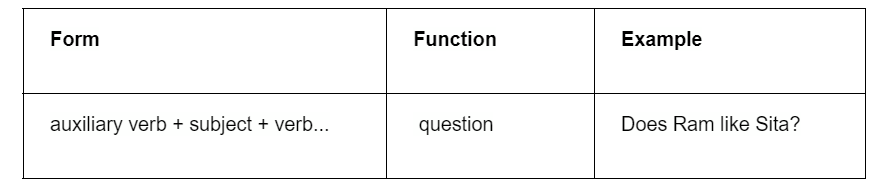
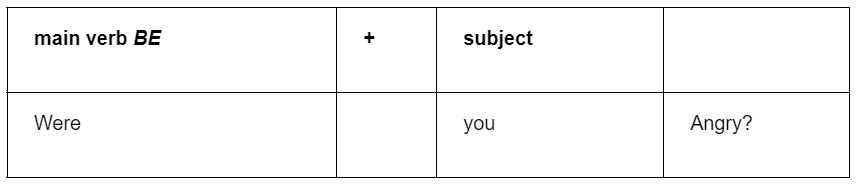
The interrogative sentence starts with a primary verb that comes before the subject. For better understanding we shall read an example:
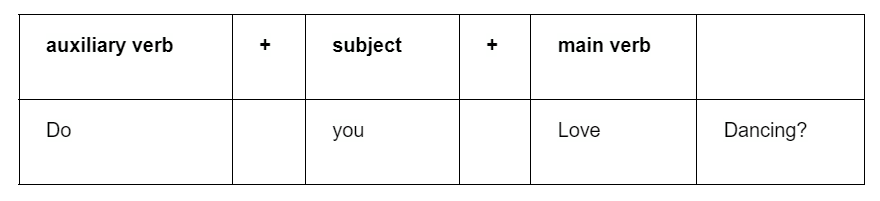
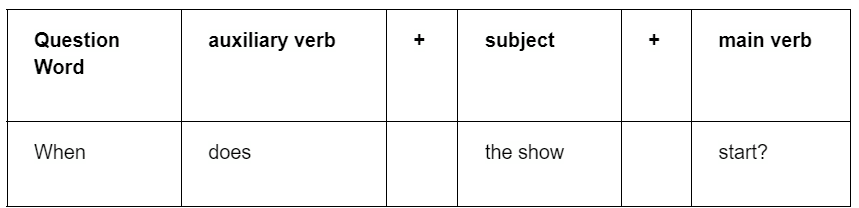
There is a sentence “ Who was the boy that night?” Here, “who” in the sentence is a pronoun and the word “was” is the primary verb in the sentence. An interrogative sentence can be made with an auxiliary verb as well. For example “ Did she mean to dance jazz?” Here, the word “did” is an auxiliary verb, and response to this sentence will become “she meant to dance jazz” where “meant” biomes the main verb.
Interrogative sentences are of four types. They are:
An Example for the form of an interrogative sentence is:
The final punctuation mark in an interrogative sentence is always a question mark(?).
Interrogative sentences may be in affirmative or negative form and in any tense.
The main function of an interrogative sentence is to ask a direct question. The interrogative sentence represents asking or requesting some information. The interrogative sentences require an answer to the question it asks. For Example:
The answer to the above question will be given in yes or no.
The answer will be stating the reason for his late arrival.
The answer can be I don’t know.
Interrogative sentences are frequently used in speaking and writing. They are common and easy to learn sentence types. For example:
There are three types of interrogative questions and they can be classified as :
Answer: No Thank you
Where do you live? (In Delhi.)
Do you want tea or coffee? (Tea please.)
An affirmative imterrogative sentence gets changed into a negative interrogative. If it is already negative then it got changed into a bare interrogative.
Examples of how to Change into Interrogative Sentence
He was very gentle. (Assertive)
Wasn’t he very gentle? (Interrogative)
He is not a good person. (Assertive)
Is he a good person? (Interrogative)
If in a sentence, there is no use of an auxiliary verb, then you can change the sentence by using do/does/did/don’t/doesn’t.
Examples:
He plays football. (Assertive). Does he play football? (Interrogative)
They did not play football yesterday. (Assertive). Did they play football yesterday? (Interrogative)
In interrogative sentence Never is replaced by ever.
Examples:
I never drink tea. → Assertive
Do I ever drink tea? → Interrogative
In an interrogative sentence Everybody/everyone/all is replaced by Who+ don’t / doesn’t / didn’t.
Examples:
Assertive Sentence:
Everybody wishes to be likeable.
Interrogative Sentence:
Who doesn’t wish to be likeable?
In a sentence “ Every + any form of nouns” will get replaced by “is there any” + noun +who don’t /doesn’t / didn’t.
Examples:
Assertive Sentence:
Every man wishes to have a beautiful wife.
Interrogative sentence:
Is there any man who doesn’t wish to have a beautiful wife?
Who comes in place of Nobody/no one/ none.
Examples:
Assertive Sentence:
Nobody could count hairs in the head.
Interrogative Sentence:
Who could ever count hairs in the head?
A sentence with the use of “There is no” will get replaced by “is there any/ who/ what”.
Examples:
Interrogative sentence:
What is the use of this book?
Assertive Sentence:
There is no book better than Xyz.
“It doesn’t matter” is replaced by “what though/does it matter”.
Examples:
An assertive sentence :
It does not matter if you pass the exam.
Interrogative sentence:
What if you pass the exam?
To understand interrogative sentences, we can check the examples of interrogative sentence.
An interrogative sentence is one that asks for the question and ends with question marks. It can be direct/Indirect or can be used with or without pronouns. The interrogative sentence may be positive or negative. It can ask any alternative questions or tag questions. The basic rule of the interrogative sentence is that they begin with interrogative pronouns or verbs and end with question marks.


 Profile
 Settings
 Refer your friends
 Sign out