Neolithic age or the final stage which means it was the third part i.e. after the Mesolithic period. The word Neolithic is mostly applied to anthropology and archaeology. The period was marked by cultural evolution or development in technology among prehistoric humans. The era was characterized by using cultivated land or domestic cattle, sheep and goats, and the arrival of crafts such as weaving and pottery. This period has its importance due to its megalithic architecture, utilising the weapons and tools constructed out of stone or domestication of plants. Palaeolithic and Mesolithic culture differentiates them from the Neolithic culture of hunting, food gathering or fishing.
The Neolithic Revolution or referred to as the first agricultural revolution during the late 19th century CE by historians. It covered the period ranging from around 7,000 B. C. to 1,000 B.C. in India. The period provided a remarkable change in the lifestyle of Homo sapiens in various fields. The archaeologist indicates that the era is characterised by the advent of agriculture, operating tools and weapons constructed of polished stones, the first appearance of pottery or growing some major crops such as ragi, rice, cotton, wheat, etc. earlier human beings lived in tiny groups as hunter-gatherers. Some gender discrimination during then in activities like hunting and gathering plants was noticeable. Men used to hunt and women used to gather plants. However, things started to change by the end of the final Ice age. With the increase in population, nourishing and feeding the increased number of people was essential some scholars suggested starting growing plants and food of their own. This phase revolutionized human life and so-known as the Agriculture Revolution.
There were several developmental phases in the Neolithic age or characteristics of the development of the Neolithic Age. The era experienced the turning of a man from a food producer to a food gatherer. The development of the Neolithic period was around the Holocene Epoch. The usefulness of metal was not known to them.
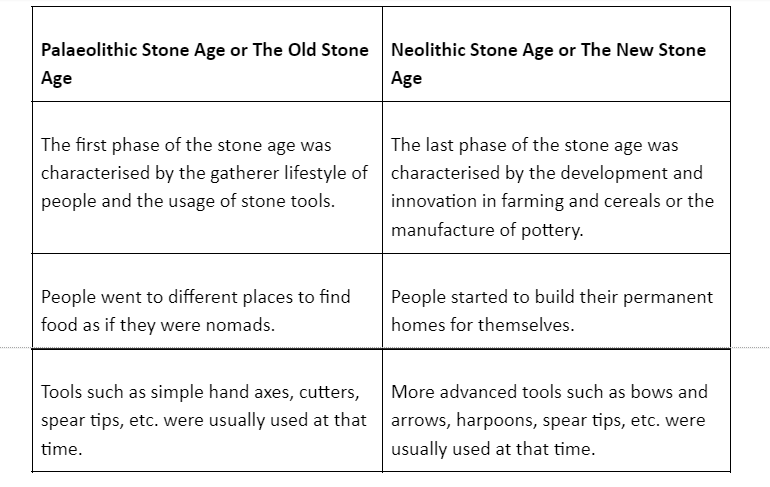
Some of the changes which occurred between the Palaeolithic Stone Age and the Neolithic Stone Age are as follows:
The Neolithic Period or the New Stone age is the period which is indicated with agriculture as its connection because in this time the introduction of cereal cultivation and animal domestication occurred. The people began to utilise cultivated land to grow different crops, advanced tools, pottery or constant shelters. The Palaeolithic Era succeeds the Mesolithic Era and Mesolithic Era succeeds the Neolithic Era, which is also the last stage of the Stone Age. Copper metallurgy was introduced by the end of the Neolithic era, indicating a changing time to the Bronze Age. The Eneolithic Era or Chalcolithic Era is thus referred to as the Bronze Era.


 Profile
 Settings
 Refer your friends
 Sign out