

MainsGS-3The Hindu 21 OCT
Aditya-L1’s VELC Generates Doppler Velocity Images of the Solar Corona: Scientists Have Generated
Space Technology
Why in News
- Scientists have generated Doppler velocity images of the solar corona using the Visible Emission Line Coronagraph (VELC) on India’s Aditya-L1, offering new insights into the direction of solar eruptions.
Key Points
- What Was Achieved:
- Images made from VELC data on Aditya-L1, India’s first solar mission.
- Expected to show how Coronal Mass Ejections (CMEs) propagate along the Sun-Earth direction, information unavailable so far.
- Generated by scientists at the Indian Institute of Astrophysics (IIA), Bengaluru.
- Processing software developed by Dr V. Muthupriyal (Senior Project Scientist, VELC operations team) and her team.
- Why Direction of CMEs Matters:
- Solar activity ejects hot plasma; powerful eruptions like CMEs throw out massive, energetic plasma clouds.
- They can travel towards Earth or in any other direction.
- CMEs can disrupt near-Earth space, so knowing their direction as they erupt is important.
- How the Doppler Effect Helps:
- Sound analogy: a train’s horn sounds higher in pitch as it approaches and lower as it moves away.
- The same idea applies to light: the Doppler shift of light shows the plasma’s velocity along the line of sight.
- Positive Doppler velocity: plasma moving away from the observer; negative: moving towards the observer.
- Mains Angle:
- Space weather and national security: CMEs can damage satellites, disturb communication and navigation (GPS), and stress power grids. Early knowledge of whether a CME is Earth-bound helps in timely warnings.
- Indigenous capability: the unique VELC capability shows India’s growing strength in space science instruments, with a role for academic institutions alongside ISRO.
- Open science: sharing processed data with the global community adds to international scientific cooperation.
- Way forward: build space-weather forecasting systems, combine Aditya-L1 data with other missions, and train more solar physicists.
- Unique Points:
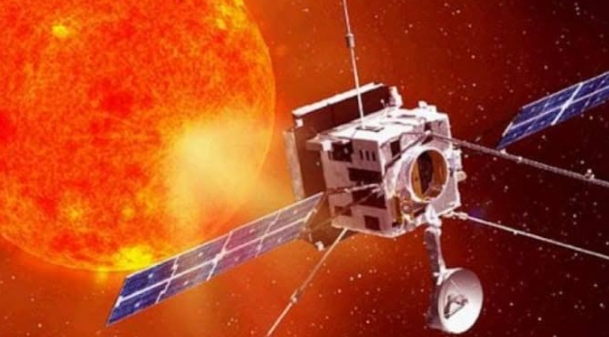
- Aditya-L1 was launched by ISRO on 2 September 2023 and placed in a halo orbit around Lagrange Point 1 (L1), about 1.5 million km from Earth, which gives an uninterrupted view of the Sun .
- It carries seven payloads, including VELC, the Solar Ultraviolet Imaging Telescope (SUIT) and Aditya Solar wind Particle EXperiment (ASPEX)
- VELC is a coronagraph: it blocks the Sun’s bright disc, creating an artificial eclipse so the faint corona can be seen. It was built by IIA
- The corona is the Sun’s outer atmosphere, hotter than the surface, a puzzle called the coronal heating problem.
- Plasma is the fourth state of matter, a gas of charged particles.
आदित्य-L1 के VELC ने सौर कोरोना की डॉप्लर वेग छवियाँ तैयार कीं
समाचार में क्यों:
- वैज्ञानिकों ने भारत के आदित्य-L1 पर लगे विज़िबल एमिशन लाइन कोरोनाग्राफ़ (VELC) का उपयोग करके सौर कोरोना की डॉप्लर वेग छवियाँ तैयार की हैं, जो सौर विस्फोटों की दिशा के बारे में नई जानकारी देती हैं।
मुख्य बिंदु
- क्या हासिल हुआ:
- छवियाँ भारत के पहले सौर मिशन आदित्य-L1 के VELC डेटा से बनाई गईं।
- इनसे यह पता चलने की उम्मीद है कि कोरोनल मास इजेक्शन (CMEs) सूर्य-पृथ्वी दिशा में कैसे आगे बढ़ते हैं, जो जानकारी अब तक उपलब्ध नहीं थी।
- भारतीय तारा भौतिकी संस्थान (IIA), बेंगलुरु के वैज्ञानिकों द्वारा तैयार।
- प्रोसेसिंग सॉफ़्टवेयर डॉ. वी. मुथुप्रियल (वरिष्ठ परियोजना वैज्ञानिक, VELC संचालन दल) और उनकी टीम ने विकसित किया।
- CMEs की दिशा क्यों महत्वपूर्ण है:
- सौर गतिविधि गर्म प्लाज़्मा बाहर फेंकती है; CMEs जैसे शक्तिशाली विस्फोट विशाल, ऊर्जावान प्लाज़्मा बादल बाहर फेंकते हैं।
- ये पृथ्वी की ओर या किसी भी अन्य दिशा में जा सकते हैं।
- CMEs पृथ्वी के निकट के अंतरिक्ष को बाधित कर सकते हैं, इसलिए विस्फोट के समय ही उनकी दिशा जानना महत्वपूर्ण है।
- डॉप्लर प्रभाव कैसे मदद करता है:
- ध्वनि का उदाहरण: ट्रेन का हॉर्न पास आते समय ऊँची पिच में और दूर जाते समय नीची पिच में सुनाई देता है।
- यही विचार प्रकाश पर लागू होता है: प्रकाश का डॉप्लर विस्थापन (शिफ़्ट) प्लाज़्मा का दृष्टि-रेखा के अनुदिश वेग दर्शाता है।
- धनात्मक डॉप्लर वेग: प्लाज़्मा प्रेक्षक से दूर जा रहा है; ऋणात्मक: प्रेक्षक की ओर आ रहा है।
- मुख्य परीक्षा दृष्टिकोण :
- अंतरिक्ष मौसम और राष्ट्रीय सुरक्षा: CMEs उपग्रहों को नुकसान पहुँचा सकते हैं, संचार और नेविगेशन (GPS) को बाधित कर सकते हैं, और पावर ग्रिड पर दबाव डाल सकते हैं। CME के पृथ्वी की ओर आने की पूर्व जानकारी समय पर चेतावनी में मदद करती है।
- स्वदेशी क्षमता: VELC की अनूठी क्षमता अंतरिक्ष विज्ञान उपकरणों में भारत की बढ़ती शक्ति को दर्शाती है, जिसमें ISRO के साथ शैक्षणिक संस्थानों की भी भूमिका है।
- मुक्त विज्ञान (ओपन साइंस): संसाधित डेटा को वैश्विक समुदाय के साथ साझा करना अंतरराष्ट्रीय वैज्ञानिक सहयोग को बढ़ाता है।
- आगे की राह: अंतरिक्ष-मौसम पूर्वानुमान प्रणालियाँ विकसित करना, आदित्य-L1 डेटा को अन्य मिशनों के साथ जोड़ना, और अधिक सौर भौतिकविदों को प्रशिक्षित करना।
- विशिष्ट बिंदु:
- आदित्य-L1 को ISRO ने 2 सितंबर 2023 को प्रक्षेपित किया और पृथ्वी से लगभग 15 लाख किमी दूर लैग्रेंज बिंदु 1 (L1) के चारों ओर हेलो कक्षा में स्थापित किया, जहाँ से सूर्य का निर्बाध दृश्य मिलता है।
- इसमें सात पेलोड हैं, जिनमें VELC, सोलर अल्ट्रावायलेट इमेजिंग टेलीस्कोप (SUIT) और आदित्य सोलर विंड पार्टिकल एक्सपेरिमेंट (ASPEX) शामिल हैं।
- VELC एक कोरोनाग्राफ़ है: यह सूर्य की चमकीली डिस्क को ढककर कृत्रिम ग्रहण बनाता है ताकि मंद कोरोना देखा जा सके। इसे IIA ने बनाया है।
- कोरोना सूर्य का बाहरी वायुमंडल है, जो सतह से अधिक गर्म है; इस पहेली को कोरोनल तापन समस्या कहा जाता है।
- प्लाज़्मा पदार्थ की चौथी अवस्था है, आवेशित कणों की एक गैस।